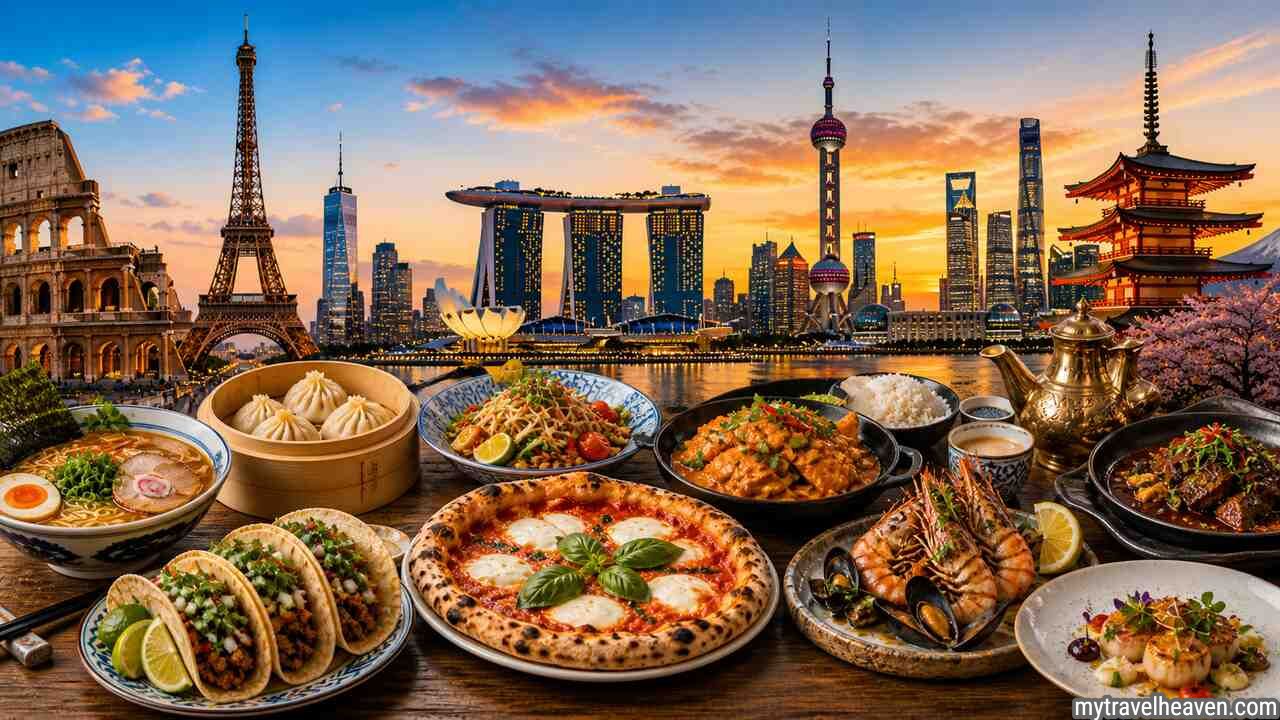
Best food cities for culinary travel with global dishes and skyline.
Food & Cuisine

Best Food Cities for Culinary Travel: A Global Gastronomy Guide

Introduction

Culinary travel transforms ordinary trips into immersive cultural experiences, where every dish reflects history, geography, and tradition. The best food cities offer more than just meals—they provide identity through flavors, techniques, and local ingredients. From vibrant street markets to Michelin-starred restaurants, these destinations attract travelers seeking authentic tastes and unforgettable dining experiences. This guide explores the world’s top food cities, helping you plan a journey centered around exceptional cuisine and rich culinary heritage.

Explore Street Food Culture in Bangkok

Start your culinary journey in Bangkok by diving into its legendary street food scene, where vendors serve freshly cooked meals at nearly every corner. Dishes like Pad Thai, Som Tam, and Mango Sticky Rice define the city’s flavor profile, offering a balance of sweet, sour, salty, and spicy elements.

To fully experience Bangkok’s food culture, explore areas such as Yaowarat (Chinatown), Ratchada Night Market, and Sukhumvit Soi 38. Vendors specialize in specific dishes, ensuring mastery and consistency. Street-side cooking methods include wok frying, charcoal grilling, and mortar pounding.

Beyond taste, Bangkok’s street food reflects Thai traditions and community life. Late-night dining, communal seating, and affordable pricing make it accessible. Seasonal fruits, herbal ingredients, and regional spices add depth to every meal, creating a culinary landscape rooted in authenticity.

Indulge in Fine Dining Experiences in Paris

Elevate your culinary travel by experiencing Parisian fine dining, where precision, artistry, and technique define every dish. Signature offerings include Coq au Vin, Duck Confit, and delicate pastries like macarons and éclairs.

To navigate Paris’s dining scene, reserve tables at Michelin-starred establishments while also exploring classic bistros and patisseries. Areas like Le Marais and Saint-Germain-des-Prés host a blend of modern and traditional cuisine.

Paris emphasizes culinary craftsmanship through sauces, wine pairings, and presentation. Local markets such as Marché Bastille showcase fresh produce, cheeses, and charcuterie, allowing visitors to appreciate the ingredients behind the cuisine.

Experience Traditional Flavors in Tokyo

Immerse yourself in Tokyo’s culinary precision by tasting traditional Japanese dishes prepared with meticulous attention to detail. Sushi, ramen, tempura, and kaiseki meals represent the city’s diverse food offerings.

Plan visits to Tsukiji Outer Market, Shinjuku’s ramen alleys, and Ginza’s high-end sushi bars. Each area specializes in specific culinary experiences, from quick meals to multi-course dining.

Tokyo’s food culture emphasizes seasonality, freshness, and presentation. Chefs train for years to perfect techniques, and even simple dishes reflect balance and harmony. Dining etiquette and respect for ingredients play a crucial role in the experience.

Discover Regional Diversity in Mexico City

Taste Mexico’s rich culinary diversity in Mexico City, where indigenous ingredients blend with Spanish influences. Tacos al pastor, tamales, mole, and elote define the city’s vibrant food culture.

Visit local markets like Mercado de San Juan and street food hubs across Roma and Condesa neighborhoods. Each location offers regional specialties from across the country.

Mexican cuisine relies on corn, chili peppers, beans, and herbs. Cooking methods such as slow roasting and grinding create layered flavors. The city serves as a central hub where regional traditions converge into a unified culinary experience.

Savor Seafood Specialties in Barcelona

Enjoy coastal cuisine in Barcelona, where seafood dominates menus and Mediterranean flavors shine. Paella, grilled octopus, anchovies, and tapas create a diverse dining experience.

Explore La Boqueria Market, beachfront restaurants, and tapas bars in the Gothic Quarter. Dining is often social, with shared plates and extended meals.

Barcelona’s cuisine highlights olive oil, garlic, tomatoes, and fresh seafood. The city blends Catalan traditions with modern culinary trends, offering both rustic and innovative dishes.

Compare Top Culinary Cities Worldwide

City Signature Dishes Dining Style Key Ingredients Experience Type
Bangkok Pad Thai, Som Tam Street Food Herbs, chili, rice Fast-paced, vibrant
Paris Coq au Vin, pastries Fine Dining Butter, wine, cheese Elegant, refined
Tokyo Sushi, Ramen Traditional & Modern Seafood, rice, soy Precise, cultural
Mexico City Tacos, Mole Street & Casual Corn, chili, beans Bold, diverse
Barcelona Paella, Tapas Social Dining Seafood, olive oil Relaxed, communal

Plan Your Culinary Travel Itinerary

Begin planning by identifying your preferred food experiences, such as street food, fine dining, or regional specialties. Choose cities that align with your taste preferences and travel goals.

Next, research seasonal dishes, food festivals, and local dining customs. Booking food tours, cooking classes, and restaurant reservations ensures a structured and enriching experience.

Consider logistics such as location, transportation, and accommodation near food districts. Balance your itinerary with both popular and hidden culinary spots to maximize exposure to local cuisine.

Understand Local Dining Etiquette and Customs

Respecting local dining etiquette enhances your culinary travel experience and ensures cultural appreciation. Each city follows unique practices, from tipping norms to table manners.

Learn basic phrases, ordering styles, and meal structures before visiting. For example, sharing plates is common in Spain, while quiet dining is valued in Japan.

Understanding these customs helps avoid misunderstandings and allows deeper engagement with local communities. Observing how locals eat often leads to discovering authentic dining spots.

Budget for Food-Focused Travel

Allocate your budget based on dining preferences, balancing luxury meals with affordable street food. Cities like Bangkok and Mexico City offer high-quality meals at low costs, while Paris and Tokyo may require higher spending.

Track expenses for daily meals, special dining experiences, and food tours. Setting a flexible budget allows you to explore unexpected culinary opportunities.

Food travel does not always require high spending. Strategic planning ensures a rich experience regardless of budget constraints.

Conclusion

Culinary travel offers a gateway to understanding cultures through taste, tradition, and shared experiences. Cities like Bangkok, Paris, Tokyo, Mexico City, and Barcelona stand out as global food destinations due to their diversity, authenticity, and culinary excellence. By planning strategically, respecting local customs, and exploring both street and fine dining, travelers can transform their journeys into unforgettable gastronomic adventures.

FAQs

Which city is best for street food lovers?

Bangkok is widely considered the top destination for street food due to its variety, affordability, and accessibility.

What is the most expensive food city to visit?

Paris and Tokyo are among the most expensive due to their high-end dining scenes and premium ingredients.

How do I find authentic local food spots?

Explore local markets, follow resident recommendations, and avoid overly tourist-focused areas.

Is culinary travel suitable for budget travelers?

Yes, cities like Mexico City and Bangkok offer exceptional food experiences at low prices.

How many food cities should I visit in one trip?

Focus on 1–3 cities per trip to fully experience each destination without rushing.

Are food tours worth it?

Food tours provide curated experiences, local insights, and access to hidden culinary gems, making them highly valuable.

Leave a Reply

Your email address will not be published. Required fields are marked *