


Whenever I compare an Airbnb with a hotel, I no longer start with the nightly price.
I start with a simpler question: What kind of trip am I actually taking?
A two-night city break is very different from a two-week stay. A solo business traveler needs something different from a family of five. A couple arriving after midnight may value a staffed front desk, while a group staying for a week may care more about bedrooms, a kitchen, and a washing machine.
That is why the Airbnb vs hotel comparison does not have one universal winner. I have found the most useful way to compare them is to look at the entire stay, including space, location, service, privacy, booking conditions, and the final price rather than the headline nightly rate.
Airbnb vs Hotel: The Quick Answer
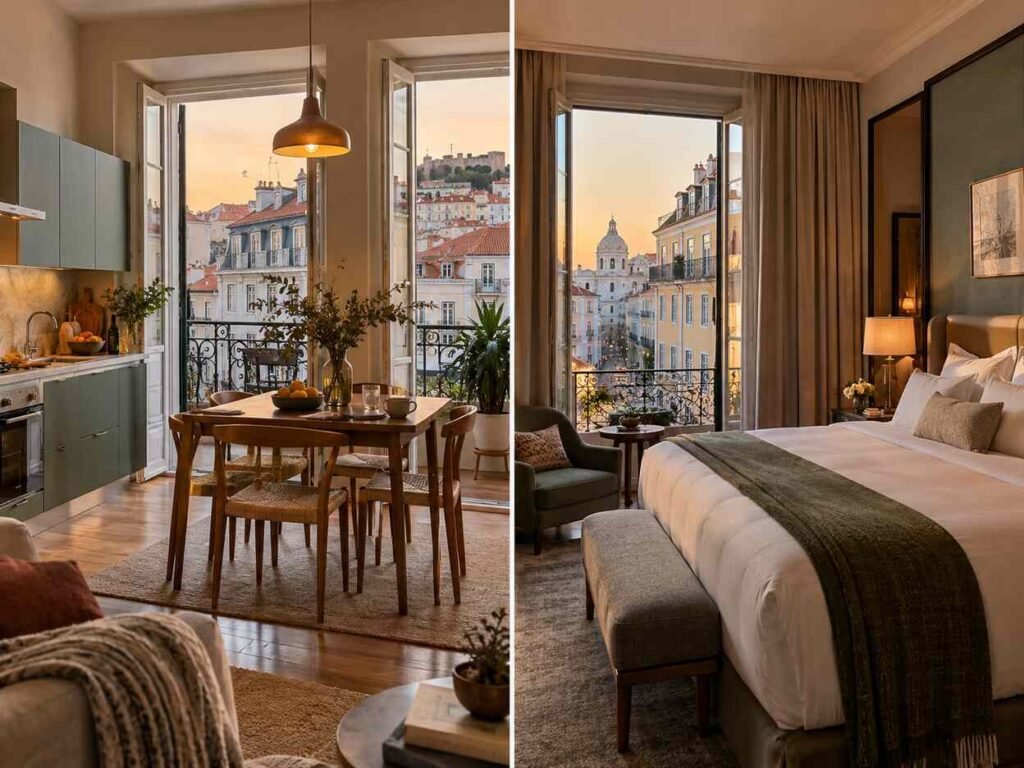
For a short trip, especially one or two nights, I usually see the strongest case for a hotel. Check-in tends to be simpler, there is normally less responsibility after arrival, and services such as reception, luggage storage, room cleaning, and breakfast may make a short stay much easier.
For a longer trip, a family holiday, or a group traveling together, an Airbnb or similar vacation rental can make more sense. Having several bedrooms, a living room, a kitchen, and laundry facilities can change the entire experience.
The important word is can. An Airbnb is not automatically cheaper, and a hotel is not automatically more expensive.
| Travel need | Airbnb often works better | Hotel often works better |
|---|---|---|
| 1 or 2-night stay | Sometimes | Yes |
| Week-long stay | Often | Sometimes |
| Solo traveler | Sometimes | Often |
| Couple | Depends on trip style | Depends on trip style |
| Family | Often | Family suites can compete |
| Large group | Often | Multiple rooms can become expensive |
| Business trip | Sometimes | Often |
| Kitchen needed | Yes | Usually limited |
| Daily service | Rare | More common |
| 24-hour assistance | Uncommon | Common at many hotels |
| Local residential setting | Often | Sometimes |
| Predictable room standard | Less predictable | Usually stronger |
| Several bedrooms | Strong advantage | Usually costly |
| Very late arrival | Can be awkward | Usually easier with staffed reception |
The Biggest Mistake: Comparing Only the Nightly Price
This is where I pay the most attention.
An Airbnb listing may initially look cheaper than a hotel room. But the final amount can include cleaning charges, service fees, taxes, extra-person charges, pet charges, or other disclosed costs depending on the property.
Airbnb says the total reservation price can include the host’s nightly rate plus applicable fees, taxes, and other charges. Its search pricing now includes applicable fees, although taxes may still appear later depending on location. Airbnb is also transitioning home hosts toward a single service-fee structure, so the way service fees are divided between guests and hosts can differ between reservations during that transition.
Hotels can have extra costs too. Depending on the property and destination, that might include resort charges, parking, breakfast, local taxes, or optional services.
In the United States, comparing the two became easier after the FTC’s Rule on Unfair or Deceptive Fees took effect on May 12, 2025. Hotels, vacation rentals, and other covered short-term lodging businesses that display prices must show the total price including mandatory fees they can calculate in advance. Government taxes and genuinely optional extras can still be added later, but they must be disclosed before payment.
So my comparison rule is simple:
Ignore the first nightly price you see. Compare the final cost for the exact same dates and number of travelers.
That one habit makes the Airbnb vs hotel price comparison much more useful.
For a Short Stay, I Prefer the Simplicity of a Hotel
Imagine arriving in a busy city on Friday evening and leaving Sunday morning.
In that situation, I would rarely choose accommodation based on having a washing machine or a full kitchen. I would care more about getting inside quickly, dropping my bag, taking a shower, and going out.
That is where hotels are difficult to beat.
At a well-run hotel, the arrival process can be simple. I can walk into reception, confirm the booking, collect the room key, and ask questions if something is unclear. If I arrive before check-in or leave several hours after checkout, luggage storage may also be available.
With a vacation rental, arrival can require more planning. Some properties have self check-in, which can be excellent. Others may require finding a lockbox, entering a building code, following detailed instructions, or coordinating with a host.
None of those things is necessarily difficult. They simply matter more when I am tired after a flight or arriving late at night.
For a Longer Stay, an Airbnb Can Feel More Like Living Than Visiting
The comparison changes when I imagine staying for seven, ten, or fourteen nights.
After several days, hotel rooms can begin to feel small. Eating every meal outside also becomes tiring and expensive.
A private rental with a kitchen changes the rhythm of the trip.
I can keep drinks cold, prepare breakfast, make simple meals, store leftovers, and sometimes wash clothes without looking for a laundromat or hotel laundry service.
For longer trips, I also value having separate spaces. A bedroom, living room, kitchen, and balcony can make a stay feel less cramped.
This becomes especially important when two people have different schedules. One person can sleep while the other works or watches television without everyone sharing one room.
That is one of the strongest reasons I would consider an Airbnb for a longer stay.
Airbnb Usually Has an Advantage for Families and Groups
The difference can become even clearer when four, six, or eight people travel together.
Booking several hotel rooms may split everyone across different floors or corridors. Families with young children may not find that convenient.
A vacation rental can place everyone under one roof.
There may be several bedrooms, a shared living area, a dining table, and a kitchen. Parents can prepare food for children. Friends can sit together after sightseeing instead of meeting in a hotel lobby.
The financial comparison can also change because the cost of one larger rental is shared between several travelers.
But I never assume the Airbnb will be cheaper. I still compare the final rental price against the cost of the hotel rooms actually required.
Hotels Win When I Want Service
This is probably the clearest difference between the two accommodation styles.
A hotel is not just a room. At many properties, I am also paying for people and services around that room.
Depending on the hotel, that may include reception staff, housekeeping, luggage assistance, maintenance, breakfast, restaurants, a gym, room service, concierge help, or someone available when something goes wrong.
The exact level of service varies enormously between a small budget hotel and a five-star property, but the basic advantage remains.
With an Airbnb, the experience is usually more independent.
That independence can be enjoyable. I may enter with a code, close the door, and have an entire apartment to myself.
But if the heating stops working at midnight or I cannot open the entrance door, assistance may depend on how quickly the host or property manager responds.
For travelers who want someone nearby to solve problems, I normally give the hotel the advantage.
Airbnb Wins When I Want Privacy and Personal Space
Service is not always what I want.
Sometimes I prefer entering an apartment without passing reception every time I return.
That privacy is especially appealing on longer stays, romantic trips, family holidays, and trips where I simply want to slow down.
A good vacation rental can feel closer to having a temporary home.
I can buy fruit from a neighborhood market, make coffee in the morning, sit in a living room, and organize the day without feeling confined to a bedroom.
This is one reason the Airbnb vs hotel decision is about lifestyle as much as price.
Location Can Completely Change the Decision
Hotels often cluster around city centers, airports, business districts, major stations, beaches, and tourist areas.
Vacation rentals can appear much deeper inside residential neighborhoods.
That can produce two completely different versions of the same destination.
A hotel near a major railway station may make sightseeing easier because transport connections are close. A rental in a residential district may provide local bakeries, supermarkets, cafés, parks, and quieter streets.
Neither experience is automatically more authentic.
Some travelers assume staying in an apartment always creates a more local experience. It does not. A vacation rental can still be in a heavily visited area, while an independently run hotel can be deeply connected to its neighborhood.
I look at the map carefully rather than relying on the accommodation category.
Hotels Usually Offer More Consistency
One of the biggest differences I notice when comparing listings is predictability.
Hotels usually have several rooms operating under the same management system. There are standards for check-in, cleaning, maintenance, and customer service, even though quality can still vary considerably from hotel to hotel.
Every Airbnb is more individual.
That individuality is part of the attraction. One apartment may have a rooftop terrace, another may occupy a historic building, and another may provide three bedrooms for the price of a centrally located hotel room.
But individuality also creates more variation.
Photographs, recent reviews, host history, location details, bed arrangements, air conditioning, elevator access, noise reports, and house rules become especially important.
I spend more time reading the details of a vacation rental than I normally spend examining a standard hotel room.
Cancellation Rules Need Careful Attention
I never book either option before understanding what happens if the trip changes.
Airbnb cancellation conditions vary by listing. Under Airbnb’s current standard rules for shorter home stays, standard policies include a 24-hour period after confirmation in which eligible bookings can be cancelled for a full refund, provided the reservation was confirmed at least seven days before check-in. Beyond that window, the refund conditions depend on the property’s cancellation policy.
Hotels also have different conditions. One rate may allow cancellation shortly before arrival, while a discounted non-refundable rate may offer no refund after booking.
This means I never compare only Airbnb against hotel.
I compare specific reservation against specific reservation.
A flexible hotel rate may be worth paying more for if my flights are uncertain. A flexible vacation rental may be more attractive than a cheaper room with a strict cancellation condition.
What About Cleaning?
This topic causes a lot of debate.
Airbnb allows hosts to set cleaning fees, and the amount can vary by property and length of stay.
The more practical issue for me is not simply whether a cleaning charge exists. It is what I am expected to do before leaving.
Every rental has its own rules.
I read the checkout instructions before booking whenever they are available. If the property expects reasonable things such as locking the door or putting rubbish in the correct place, I am comfortable with that.
If the rules feel complicated or unsuitable for the kind of trip I am taking, I choose another property.
With a hotel, checkout is usually simpler. I pack my belongings, check the room, return the key if required, and leave.
For a one-night trip, that convenience matters much more to me than it does during a two-week stay.
Which Is Better for Solo Travelers?
For a solo city break, I generally lean toward a hotel unless the rental has a major advantage.
I may value having reception staff, luggage storage, a central location, and fewer check-in complications.
A small hotel room is also less of a problem when only one person is using it.
However, a solo traveler staying for several weeks may reach the opposite conclusion. A small apartment with a kitchen and washing machine can become much more useful than hotel services.
Length of stay matters again.
Which Is Better for Couples?
This is the closest comparison.
For a romantic weekend, I may choose a hotel because I want an easy stay and do not plan to cook.
For a slow one-week trip, I may choose an apartment because having breakfast at home, buying local food, and having more space can become part of the experience.
Location often decides it.
I would take a good hotel within walking distance of everything I want to see over a beautiful apartment requiring a long commute every morning.
Which Is Better for Business Travel?
Hotels usually have the stronger case.
Business travel rewards predictability.
I may need a reliable check-in process, early breakfast, luggage storage, reception support, a work desk, meeting facilities, or easy transportation to an airport or commercial district.
Hotels also fit more naturally into corporate booking systems and loyalty programs.
An apartment can still work well for a long assignment or remote-work stay, especially when extra living space and a kitchen matter more than hotel facilities.
But for a short business trip with a fixed schedule, I would generally prioritize convenience.
Where Airbnb Can Be Much Better
There are some trips where a normal hotel room simply does not match what I need.
A countryside house for several friends, a ski chalet, a seaside apartment with a kitchen, a large family property, or a month-long city stay can make a vacation rental much more practical.
The ability to book an entire property rather than several separate rooms is the key advantage.
Where a Hotel Can Be Much Better
Hotels become especially attractive when the trip is fast.
Arriving late, leaving early, changing cities every couple of days, attending meetings, or taking a quick weekend break all reduce the value of having an entire apartment.
In these situations, I want accommodation to disappear into the background.
I want to arrive, sleep, shower, store my bag if necessary, and continue the trip.
That is exactly what a good hotel does well.
The Airbnb vs Hotel Decision I Use
Instead of asking which accommodation type is generally better, I ask which one solves the problems of that particular trip.
If I am staying only a night or two, traveling alone, arriving late, working, or moving around quickly, I lean toward a hotel.
If I am staying longer, traveling with several people, cooking, washing clothes, or wanting several bedrooms and shared living space, I start looking seriously at vacation rentals.
Then I compare the final price, cancellation conditions, exact location, recent reviews, transportation, check-in process, and facilities.
Only after that do I book.
That approach has one major advantage: it stops the accommodation brand from making the decision for me.
Common Mistakes I Would Avoid
The first mistake is choosing an Airbnb because the nightly price appears lower. I compare the complete booking total instead.
The second is choosing a hotel without checking whether breakfast, parking, resort charges, or other relevant costs are included.
The third is booking a beautiful apartment far from the places I actually want to visit. Saving money on accommodation can lose its value when I spend extra time and money commuting every day.
The fourth is ignoring cancellation terms.
The fifth is booking a rental without carefully reading recent reviews, house rules, check-in information, sleeping arrangements, and access details.
The final mistake is thinking one accommodation type is always better. The trip should decide.
FAQs
Is Airbnb cheaper than a hotel?
Sometimes, but not automatically. Airbnb can offer excellent value for families, groups, and longer stays because several travelers can share one property and use facilities such as a kitchen. Hotels can be cheaper for short stays or solo travelers. Always compare the final total for identical dates.
Is a hotel better for a two-night trip?
In many cases, yes. A hotel can be particularly convenient for a short trip because check-in, luggage storage, cleaning, and assistance may be easier. An Airbnb can still be worthwhile when location, price, or space is significantly better.
Is Airbnb better for families?
It often can be. Multiple bedrooms, a kitchen, a living room, and laundry facilities are useful when traveling with children. However, family rooms and connecting hotel rooms can also be competitive, so the complete price should still be compared.
Are hotels safer than Airbnbs?
It is better not to assume that one accommodation type is always safer. Security depends on the individual property, neighborhood, building access, management, and local conditions. Hotels may provide staffed reception and controlled common areas, while rental properties vary greatly. I check recent reviews and property details in either case.
Which is better for a week-long stay?
I usually see a stronger argument for an Airbnb or serviced apartment once the stay reaches several days, especially if I want to cook, wash clothes, or have separate living and sleeping areas. A hotel may still be better if daily service, facilities, or location are more important.
Should I choose Airbnb or a hotel for my first visit to a city?
For a short first visit, I tend to favor whichever option gives me the best location and simplest arrival. Often that is a centrally located hotel. For a longer visit, a well-reviewed apartment in a convenient neighborhood may provide more space and a slower, more residential experience.
Final Verdict: Airbnb or Hotel?
After comparing the two, I would not declare Airbnb or hotels the overall winner.
Hotels win on convenience, service, predictability, and short stays.
Airbnbs often win on space, kitchens, privacy, group travel, and longer stays.
The best choice comes from matching the accommodation to the way the trip actually works.
For a weekend in a city, I would probably start with hotels. For a week with family or friends, I would start with vacation rentals. For anything in between, I would put the final prices side by side and look closely at location, cancellation terms, check-in, facilities, and recent reviews.
That simple comparison usually tells me far more than the nightly rate ever could.
