

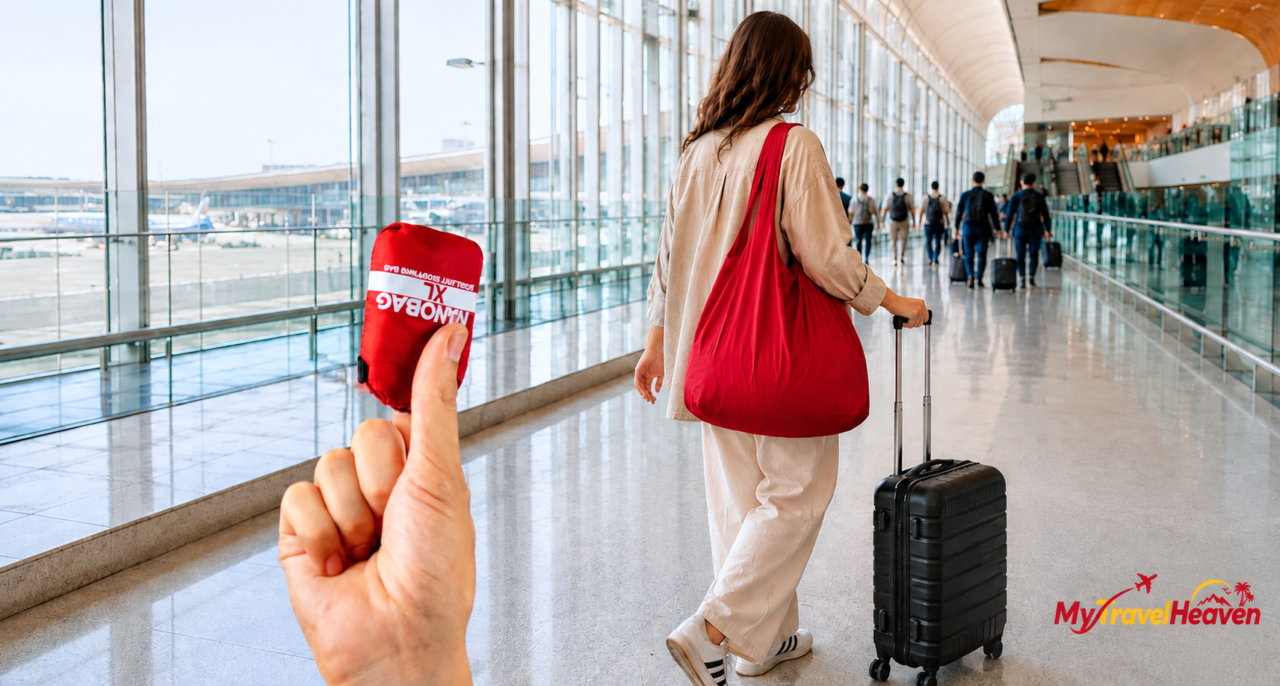
The suitcase closes perfectly at home. Then the trip begins. A jacket comes off during a warm afternoon, a market purchase will not fit in your day bag, or an unplanned beach visit adds towels and refreshments to the schedule. Each moment creates the same problem: the bags you packed no longer match the day in front of you.
A lightweight extra bag solves that mismatch. It travels inside your main luggage and provides room for the items added as the itinerary expands, without claiming the space of a full-size bag from the start.
Your Main Luggage Cannot Do Every Job
A suitcase or large travel backpack is built to move belongings between destinations. A personal bag usually has a more specific purpose like, keeping documents, electronics, medication, and other important possessions close during transit. Repacking either one even for a casual outing can disturb an arrangement.
A secondary carrier creates a clear separation between travel essentials and activity-specific items. Your passport, charger and headphones can remain where they belong while a light layer, groceries or afternoon supplies travel separately. This makes it easier to leave for an outing without reorganizing the rest of your luggage.
One Bag Can Serve Different Parts of the Trip
One lightweight bag can support multiple stages of the journey. During the outbound journey, it may keep snacks and a sweater within reach. After arrival, it can serve for sightseeing, shopping, or a day beside the water. On the final morning, it may hold purchases or separate used clothing from clean items.
These needs appear at different stages, so a versatile design often earns its place more easily than one chosen for a single activity. Before packing, identify two or three realistic situations in which you would use it. That simple check shows whether it deserves space in the suitcase.
Compactness Must Work in Practice
A design may provide plenty of room when open yet be inconvenient to pack. Its stored form should fit easily in your existing setup, whether that is a suitcase pocket, the bottom of a backpack, or a small section of your personal item.
Repacking should also be simple. When comparing lightweight travel bags, look at the storage method as closely as the open capacity. Nanobag is one example designed around this practical detail. Each bag compresses into an attached tiny pouch without requiring precise folding, so it can return to its designated place quickly after use. Because the pouch is attached, there is no separate storage case to keep track of during the trip.
Choose a Carrying Style Around Movement
Think through the most active part of the itinerary. A tote provides a broad opening for markets, groceries and relaxed outings where quick access matters. A backpack keeps both hands free during longer walks or journeys on public transport. A crossbody design can be comfortable for lighter loads and shorter stops.
The length of the trip is a poor guide on its own. A weekend built around walking and train travel may require a different design from a longer stay in one location. The better choice follows how you will move, what you will carry, and how often you will need to reach inside the bag.
Closure should support those conditions as well. An open top offers immediate access, a drawstring keeps the contents more contained, and a zipper can provide greater reassurance in crowded places. The right option depends on the balance of convenience and security your plans require.
Test the Details Before You Travel
A bag that feels suitable when empty can perform very differently once filled. Instead of judging it by weight alone, test it at home with a realistic group of items and consider four details:
- Usable capacity: Check whether the shape accommodates the items you expect to carry, rather than relying only on a stated volume.
- Carrying comfort: Fill the bag to a typical load and notice how the handles or straps sit on your hand, shoulder, or back.
- Construction: Look for dependable material and reinforced stitching in areas that receive regular strain.
- Access: Make sure the opening allows you to load and retrieve items easily in the settings where you will use it.
This quick trial reveals more than comparing specifications on their own. It shows whether the bag can perform its intended role when the trip is actually underway.
Accessibility Makes the Difference
A packed bag buried beneath a tightly arranged suitcase may be difficult to reach when the day takes a different direction. Give it a consistent location before leaving home, such as an outer luggage pocket or your personal item. At the destination, move it to the backpack, jacket or organizer you take outside so it is ready when the need appears.
Build Flexibility Into the Way You Pack
Flexible packing comes from choosing a few items that can respond to the journey as it develops. A well-chosen lightweight extra bag lets you accept an unplanned stop, shift between activities without returning to repack and bring purchases home without disturbing your main luggage.
For something that occupies so little packing space, the right extra bag can solve several travel problems before they happen. It keeps changing plans manageable, everyday outings simpler and the rest of your luggage better organized.
