

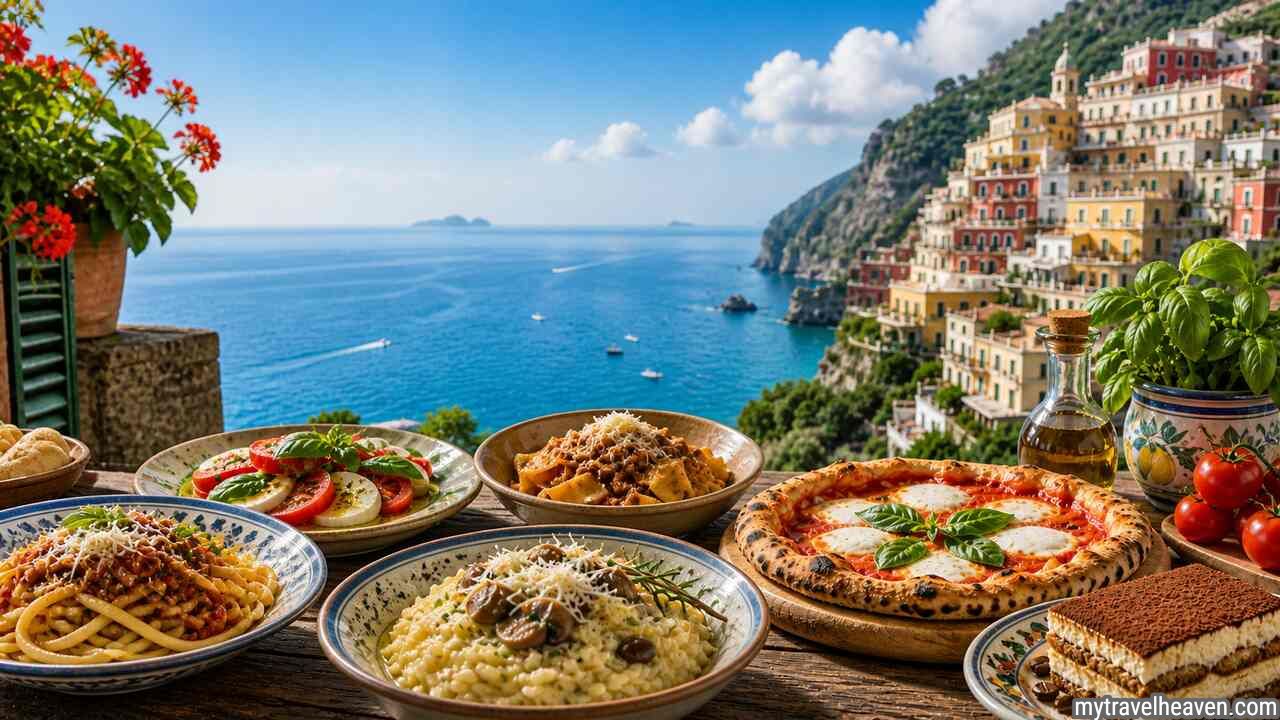
Italy rewards travelers who eat region by region. A dish in Naples, Bologna, Rome, Sicily, or Venice carries local ingredients, family methods, and centuries of food culture. These traditional dishes you must try in Italy help you experience the country through pasta, rice, seafood, meat, cheese, bread, desserts, and espresso rituals.
Start With Regional Pasta Classics
Italian pasta changes from one region to another, so choosing the right dish in the right city improves the entire meal. In Rome, order carbonara, cacio e pepe, amatriciana, or gricia. These dishes use simple ingredients, but the technique creates depth. Carbonara combines pasta, egg yolk, pecorino Romano, guanciale, and black pepper. Cacio e pepe uses pecorino Romano and pepper to create a creamy sauce without cream.
In Bologna, try tagliatelle al ragù. This dish uses fresh egg pasta and a slow-cooked meat sauce made with beef, pork, tomato, wine, onion, carrot, and celery. The sauce coats wide ribbons of pasta, which hold the richness better than spaghetti. In Liguria, order trofie al pesto. Basil, pine nuts, garlic, Parmigiano Reggiano, pecorino, and olive oil form a green sauce that tastes fresh and aromatic.
Southern Italy offers stronger tomato flavors. Naples serves spaghetti alle vongole and pasta alla Genovese, while Sicily serves pasta alla Norma with eggplant, tomato, basil, and ricotta salata. Each pasta dish reflects local agriculture, climate, and cooking habits, so the best choice depends on where you are eating.
Choose Pizza in Its Birthplace
Pizza in Italy is not one single food style. Naples produces pizza Napoletana, a soft, airy, wood-fired pizza with a tender center and blistered crust. The classic Margherita uses tomato, mozzarella, basil, olive oil, and salt. The balance matters more than heavy toppings. A good Neapolitan pizza has a fragrant crust, bright tomato flavor, and milky mozzarella.
Rome offers pizza al taglio, which means pizza by the slice. Bakers prepare rectangular trays, cut pieces by weight, and serve them as a casual snack or lunch. The crust can be crisp, airy, or focaccia-like depending on the bakery. Common toppings include potatoes, zucchini flowers, mortadella, mushrooms, tomato, and mozzarella.
Sicily adds another pizza tradition with sfincione, a thick, spongy bread topped with tomato, onion, anchovies, oregano, and breadcrumbs. This dish feels closer to a savory street-food bread than a restaurant pizza. Trying all three styles shows how flour, fermentation, oven heat, and local toppings change the final result.
Order Rice and Polenta in Northern Italy
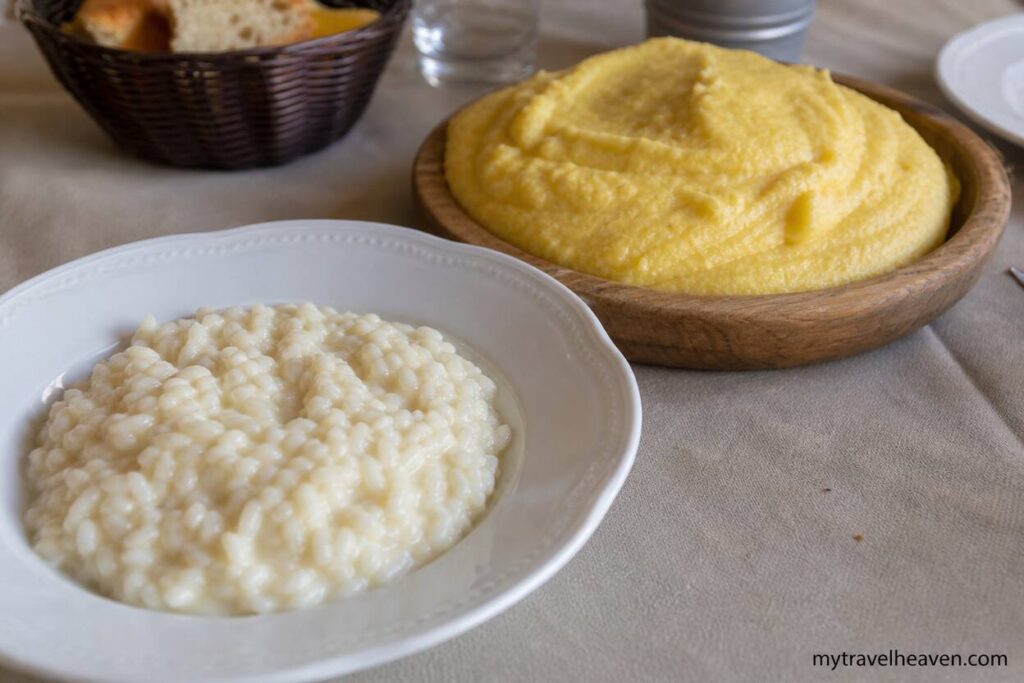
Northern Italy uses rice and corn as major staples, especially in Lombardy, Veneto, and Piedmont. Risotto alla Milanese is one of the most famous examples. It combines short-grain rice, broth, butter, onion, white wine, Parmigiano Reggiano, and saffron. The saffron gives the rice a golden color and a delicate aroma.
Veneto serves risotto with seafood, radicchio, peas, or mushrooms depending on the season. Risi e bisi, a dish from Venice and the surrounding area, sits between soup and risotto. It combines rice, peas, broth, onion, butter, and cheese. The texture should be loose, creamy, and comforting.
Polenta appears across northern mountain regions. It is made from cornmeal cooked slowly with water or broth. Restaurants serve it soft with cheese, mushrooms, sausage, or braised meat. In colder areas, polenta replaces pasta as the main base of the meal, making it essential for understanding northern Italian cooking.
Taste Seafood Along the Coast
Italy’s coastline creates a wide range of seafood dishes. In Venice, try sarde in saor, a dish of fried sardines marinated with onions, vinegar, raisins, and pine nuts. It tastes sweet, sour, and savory, and it reflects Venice’s historic trade routes. Another Venetian option is risotto al nero di seppia, made with cuttlefish ink, which gives the rice a deep black color and briny flavor.
In Naples and along the Amalfi Coast, seafood often appears with pasta, lemon, garlic, olive oil, and parsley. Spaghetti alle vongole is a must-try because it depends on fresh clams and careful timing. The sauce should be light, not heavy, and the pasta should absorb the clam juices.
Sicily and Sardinia add bold island flavors. Sicily serves grilled swordfish, sardines, tuna, capers, olives, citrus, and breadcrumbs. Sardinia offers fregola con arselle, a toasted pasta served with clams and tomato. These coastal dishes show how Italian seafood cooking often relies on freshness rather than complicated sauces.
Try Slow-Cooked Meat Specialties
Italian meat dishes often come from rural traditions where slow cooking made tougher cuts tender and flavorful. In Florence, bistecca alla Fiorentina is the iconic dish. It uses a thick T-bone or porterhouse steak, usually from Chianina cattle, grilled over high heat and served rare. The seasoning is simple: salt, pepper, and olive oil.
Rome offers saltimbocca alla Romana, made with veal, prosciutto, sage, white wine, and butter. The dish cooks quickly, but the flavor is rich and aromatic. Another Roman favorite is abbacchio, or young lamb, often roasted with garlic, rosemary, and anchovy.
In Piedmont, brasato al Barolo features beef braised in Barolo wine with vegetables and herbs. In Lombardy, ossobuco uses veal shanks cooked with wine, broth, onion, carrot, celery, and gremolata. These dishes pair well with polenta, risotto, or crusty bread because the sauce carries much of the flavor.
Enjoy Street Food Between Meals
Italian street food is practical, regional, and deeply traditional. In Sicily, arancini are fried rice balls filled with ragù, peas, mozzarella, ham, or pistachio cream depending on the town. The outside is crisp, while the inside is creamy and savory. Palermo also serves panelle, thin chickpea fritters often eaten in bread.
In Rome, supplì are fried rice croquettes filled with tomato rice and mozzarella. When pulled apart, the melted cheese stretches like a telephone wire, which gives the classic version its nickname. In Naples, cuoppo serves fried seafood, vegetables, or dough pieces in a paper cone.
In Liguria, focaccia is a daily food. Genoese focaccia has olive oil, salt, and a tender interior with a lightly crisp surface. It can be eaten for breakfast, as a snack, or beside a meal. Street food helps travelers taste local flavor without committing to a full restaurant experience.
Sample Cheese, Cured Meat, and Bread
Italian meals often begin with antipasti, and this course introduces local cheese, cured meat, olives, vegetables, and bread. Parmigiano Reggiano from Emilia-Romagna has a granular texture and nutty flavor. Pecorino Romano from Lazio and Sardinia tastes saltier and sharper because it is made from sheep’s milk.
Mozzarella di bufala from Campania is soft, milky, and best eaten fresh. Burrata from Puglia has a mozzarella shell filled with cream and stracciatella. Gorgonzola from Lombardy and Piedmont adds a creamy blue cheese option that pairs well with bread, pears, walnuts, or risotto.
Cured meats also vary by region. Prosciutto di Parma, mortadella from Bologna, speck from Alto Adige, and finocchiona from Tuscany each show different curing styles. Bread completes the plate. Tuscan bread is traditionally unsalted, while southern breads often use durum wheat and have a firm crust.
Save Room for Traditional Desserts
Italian desserts balance sweetness with texture, coffee, nuts, fruit, and cream. Tiramisù, associated with Veneto, layers mascarpone cream, coffee-soaked ladyfingers, cocoa, eggs, and sugar. A good tiramisù tastes creamy, bitter, and sweet without becoming heavy.
Sicily offers cannoli, cassata, granita, and almond pastries. Cannoli use crisp pastry tubes filled with sweet ricotta, often finished with pistachios, chocolate, or candied orange. Granita is a semi-frozen dessert made with flavors like lemon, almond, coffee, strawberry, or pistachio. In Sicily, granita with brioche is common for breakfast.
Naples is famous for sfogliatella, a shell-shaped pastry filled with ricotta, semolina, citrus, and cinnamon. Tuscany offers cantucci with Vin Santo, while Piedmont is known for hazelnut chocolate desserts. Dessert in Italy is not only an ending; it is another way to taste regional identity.
Drink Coffee the Italian Way

Coffee is a daily ritual in Italy, and ordering correctly helps you enjoy it like a local. Espresso is the standard coffee. Italians often drink it quickly at the bar counter. Cappuccino is usually a morning drink, commonly paired with a cornetto or pastry.
Caffè macchiato adds a small amount of milk foam to espresso. Caffè corretto includes a small splash of liquor, often grappa or sambuca. In summer, shakerato offers espresso shaken with ice and sugar until frothy. Naples has a strong coffee culture, with dark, intense espresso served in small cups.
Coffee connects meals, breaks, conversations, and routines. After lunch or dinner, espresso is more common than milk-based coffee. Learning this rhythm helps travelers move through Italian cafés with confidence and comfort.
Match Dishes With Their Best Regions
The easiest way to eat well in Italy is to order local specialties. In Rome, choose carbonara, cacio e pepe, supplì, artichokes, and saltimbocca. In Naples, choose pizza Napoletana, spaghetti alle vongole, sfogliatella, and espresso. In Bologna, choose tagliatelle al ragù, tortellini in brodo, mortadella, and Parmigiano Reggiano.
In Florence and wider Tuscany, choose bistecca alla Fiorentina, ribollita, pappa al pomodoro, cantucci, and Chianti-friendly meat dishes. In Venice, choose sarde in saor, risotto al nero di seppia, cicchetti, and tiramisù. In Sicily, choose arancini, pasta alla Norma, cannoli, granita, swordfish, and caponata.
Matching the dish to the region gives you better ingredients and better technique. A dish cooked where it developed usually tastes more balanced because local cooks understand its proportions, timing, and purpose.
Conclusion
Traditional dishes you must try in Italy include more than pizza and pasta. The best Italian food journey moves through regional cooking: Roman pasta, Neapolitan pizza, northern risotto, coastal seafood, Tuscan steak, Sicilian street food, local cheese, cured meats, pastries, and espresso. Each dish carries a place, a method, and a memory. When you order locally, eat seasonally, and leave room for simple specialties, Italy becomes easier to understand through flavor.
FAQs
Which traditional dish should I try first in Italy?
Start with the specialty of the city you are visiting. Choose carbonara in Rome, pizza in Naples, tagliatelle al ragù in Bologna, risotto in Milan, and cannoli in Sicily.
Is pizza better in Naples or Rome?
Naples is best for soft, wood-fired pizza Napoletana. Rome is best for thin, crisp pizza and pizza al taglio. Both styles are traditional and worth trying.
Which Italian pasta dish is the most traditional?
There is no single most traditional pasta dish for all of Italy. Carbonara, tagliatelle al ragù, trofie al pesto, pasta alla Norma, and spaghetti alle vongole are all classic regional dishes.
What dessert should I not miss in Italy?
Try tiramisù in Veneto, cannoli in Sicily, sfogliatella in Naples, gelato throughout Italy, and cantucci with Vin Santo in Tuscany.
What should I eat in Italy besides pasta?
Try risotto, polenta, pizza, seafood, bistecca alla Fiorentina, ossobuco, arancini, focaccia, cheese, cured meats, and regional desserts.
How can I find authentic Italian dishes while traveling?
Look for menus that feature local specialties, seasonal ingredients, short dish lists, and regional wines. Restaurants filled with local diners often provide a better traditional experience.
