

Introduction
When sending letters, documents, invoices, gifts, or business correspondence, one of the most common questions is how long mail will take to travel from one ZIP code to another. A ZIP code-to-ZIP code mail delivery calculator helps estimate transit times by analyzing the origin ZIP code, destination ZIP code, mail class, transportation routes, and postal processing facilities involved in the journey.
Understanding delivery estimates is important for individuals, businesses, eCommerce sellers, legal professionals, and anyone who depends on timely mail delivery. While modern postal systems use sophisticated logistics networks, delivery times can vary depending on distance, mail type, weather conditions, holidays, and operational factors. This guide explains how ZIP code-to-ZIP code mail calculators work, how to use them effectively, and what factors influence delivery speed.
Enter the Origin and Destination ZIP Codes
The first step in estimating mail delivery time is entering the sender’s ZIP code and the recipient’s ZIP code into a mail transit calculator.
The origin ZIP code identifies the starting location where the mail enters the postal system. The destination ZIP code determines the final delivery area. Postal systems use these codes to map transportation routes and identify sorting facilities responsible for processing the shipment.
Every ZIP code belongs to a specific postal region. Some ZIP code pairs are located within the same metropolitan area, while others require transportation across multiple states. The greater the distance between the two ZIP codes, the more processing and transportation steps may be involved.
Select the Appropriate Mail Service
The mail class significantly impacts how quickly mail travels between ZIP codes.
Different postal services prioritize shipments differently. Priority services receive faster transportation and processing than standard mail classes. Selecting the correct service helps produce more accurate delivery estimates.
Common mail services include:
| Mail Service | Typical Delivery Time |
|---|---|
| First-Class Mail | 1–5 business days |
| Priority Mail | 1–3 business days |
| Priority Mail Express | Overnight to 2 days |
| USPS Ground Advantage | 2–5 business days |
| Marketing Mail | Several days to weeks |
| Media Mail | 2–8 business days |
First-Class Mail is commonly used for letters, cards, and lightweight packages. Priority Mail offers faster delivery and tracking. Priority Mail Express provides the fastest domestic postal service with guaranteed delivery windows in many areas.
Choosing the correct mail class ensures the calculator generates realistic expectations.
Review USPS Delivery Zones and Transit Routes

Postal delivery calculators rely heavily on transportation zones and routing systems.
When mail enters the postal network, it travels through distribution centers, processing facilities, transportation hubs, and local post offices before reaching the destination. Each ZIP code pair corresponds to a route within this network.
Local mail may only pass through one or two facilities before delivery. Cross-country shipments often move through multiple processing centers and transportation hubs, increasing transit time.
Factors affecting routing include:
- Geographic distance
- Transportation availability
- Regional processing capacity
- Air transportation schedules
- Ground transportation networks
- Destination accessibility
Urban ZIP codes generally benefit from more frequent transportation schedules than remote rural locations.
Calculate Distance Between ZIP Codes
Distance plays a major role in delivery estimates.
Mail traveling between neighboring ZIP codes often arrives within one or two days. Mail moving across hundreds or thousands of miles generally requires additional processing and transportation time.
A ZIP code-to-ZIP code calculator uses postal routing databases rather than direct geographic distance alone. For example, two ZIP codes may appear geographically close but require processing through separate regional facilities.
Several distance categories commonly influence delivery speed:
| Distance Category | Expected Impact |
|---|---|
| Same ZIP Area | Fastest delivery |
| Same City | Usually 1–2 days |
| Same State | Typically 1–4 days |
| Neighboring States | Usually 2–5 days |
| Cross-Country | Typically 3–7 days |
Understanding distance-related transit expectations helps senders plan appropriately.
Consider Processing Facility Operations
Every piece of mail passes through one or more sorting facilities before reaching its destination.
Modern postal facilities use automated sorting equipment capable of processing thousands of pieces per hour. These systems scan addresses, sort mail by ZIP code, and direct items toward their next destination.
Processing speed depends on:
- Facility workload
- Seasonal volume
- Staffing levels
- Equipment availability
- Transportation schedules
During normal operations, mail moves quickly through sorting centers. However, high-volume periods may increase processing times.
A ZIP code delivery calculator estimates average transit times based on standard processing conditions.
Account for Weekends and Federal Holidays
Business days are an important factor when calculating delivery estimates.
Most transit estimates are based on business days rather than calendar days. Weekends and federal holidays can affect movement through the postal network, particularly for certain mail classes.
Major mailing periods often create temporary increases in transit times. These periods include:
- Thanksgiving season
- Christmas season
- New Year’s period
- Tax filing deadlines
- Election mailing periods
Mail sent immediately before a holiday may experience additional processing time compared to mail sent during regular periods.
When using a ZIP code delivery calculator, always consider the mailing date alongside the estimated transit window.
Track Delivery Performance Using USPS Tools
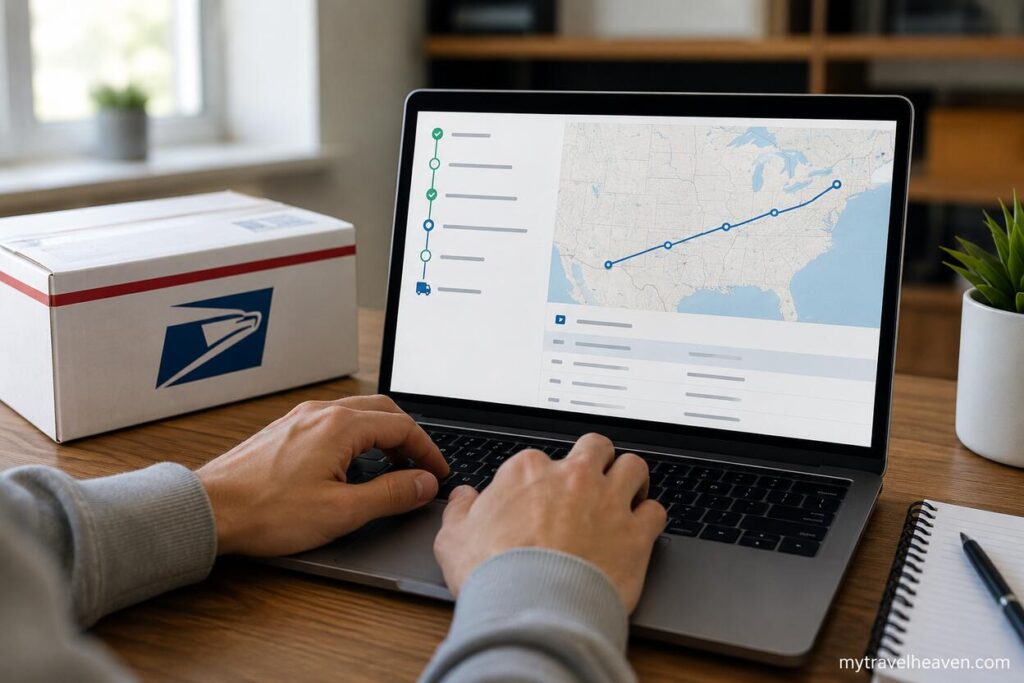
Transit estimates provide projections, but tracking offers real-time visibility.
Many mail services include tracking capabilities that allow senders and recipients to monitor progress through the postal network. Tracking information shows when an item:
- Is accepted by USPS
- Arrives at a processing facility
- Departs a distribution center
- Reaches the destination post office
- Goes out for delivery
- Is successfully delivered
Tracking data helps confirm whether actual delivery performance aligns with estimated calculator results.
Businesses often use both ZIP code calculators and tracking systems to manage customer expectations and shipping operations.
Evaluate Factors That Can Delay Mail Delivery
Even the most advanced delivery calculator cannot predict every operational disruption.
Several external factors may affect transit times:
Weather Events
Snowstorms, hurricanes, floods, and severe weather can disrupt transportation networks. Air and ground transportation delays may extend delivery times beyond standard estimates.
High Mail Volume
Holiday seasons and promotional periods often increase mail volume significantly. Additional processing demand can slow movement through distribution centers.
Incorrect Address Information
Incomplete or inaccurate addressing may cause sorting errors, forwarding requirements, or manual intervention.
Transportation Disruptions
Road closures, airline schedule changes, and logistical challenges occasionally impact delivery schedules.
Remote Delivery Areas
Rural and isolated ZIP codes sometimes receive fewer transportation connections, leading to longer transit times.
Understanding these variables helps users interpret calculator estimates more realistically.
Compare Different Mail Classes Before Sending
Choosing the right mail class can dramatically change delivery speed.
For urgent documents, expedited services may justify the higher cost. For routine correspondence, standard services often provide adequate delivery performance.
Consider these common use cases:
| Situation | Recommended Service |
|---|---|
| Legal Documents | Priority Mail Express |
| Business Contracts | Priority Mail |
| Personal Letters | First-Class Mail |
| Marketing Campaigns | Marketing Mail |
| Educational Materials | Media Mail |
| Everyday Packages | Ground Advantage |
Comparing services before mailing ensures the selected option aligns with both budget and delivery expectations.
Estimate Delivery Times for Common ZIP Code Scenarios
ZIP code calculators are particularly useful when estimating delivery times between frequently used locations.
Examples include:
Local Delivery
Mail traveling within the same city often arrives within one or two business days. Minimal transportation and fewer processing steps contribute to faster delivery.
Regional Delivery
Mail moving within the same state or neighboring states commonly arrives within two to four business days.
National Delivery
Cross-country mail generally requires additional transportation segments and may take three to seven business days depending on service type.
Rural Delivery
Mail destined for remote areas may require extra handling and transportation connections, extending delivery windows slightly beyond urban estimates.
These scenarios provide a practical framework for interpreting calculator results.
Use Delivery Estimates for Business Planning
Businesses frequently depend on ZIP code-to-ZIP code transit estimates to manage operations.
Accurate delivery projections help organizations:
- Schedule invoice mailing
- Coordinate marketing campaigns
- Plan customer communications
- Meet legal notification deadlines
- Improve customer satisfaction
- Forecast shipping performance
Many businesses integrate delivery calculators directly into logistics and fulfillment systems. This allows customer-facing delivery estimates to reflect expected transit times more accurately.
Reliable transit forecasting reduces uncertainty and supports better operational decision-making.
Verify Estimated Arrival Dates Before Mailing Important Documents
Before sending time-sensitive items, verifying estimated transit times is essential.
A ZIP code calculator provides a strong baseline estimate, but users should also consider current postal conditions, seasonal demand, and service-specific commitments.
For critical documents, expedited services and tracking options provide additional confidence. Combining estimated transit data with tracking visibility creates a more reliable delivery strategy.
Individuals sending legal papers, financial documents, applications, or contracts often benefit from selecting services that include both tracking and delivery confirmation.
Conclusion
A ZIP code-to-ZIP code mail delivery calculator is a valuable tool for estimating how long mail will take to reach its destination. By analyzing the origin ZIP code, destination ZIP code, mail class, transportation routes, processing facilities, and delivery zones, these calculators provide realistic transit estimates that help individuals and businesses plan effectively.
While most domestic mail follows predictable delivery patterns, factors such as weather, holidays, mail volume, and transportation disruptions can influence actual arrival times. Using the correct ZIP codes, selecting the appropriate mail service, and considering operational variables will produce the most accurate estimates. Whether sending a simple letter, an important document, or a package, understanding transit times helps ensure mail arrives when expected.
