

Introduction
Packing a suitcase seems simple until you are faced with limited space, weight restrictions, different weather conditions, and the need to keep important items accessible during your trip. A well-packed suitcase does more than hold clothing. It helps reduce stress, prevents wrinkles, protects valuables, and ensures that everything you need is easy to find when you arrive.
Whether you are preparing for a weekend getaway, a business trip, an international vacation, or a long-term stay, learning how to pack a suitcase efficiently can save time, money, and effort. The process involves choosing the right luggage, planning outfits, organizing essentials, maximizing space, and securing your belongings for transportation. This guide walks through every stage of suitcase packing so you can travel confidently and stay organized throughout your journey.
Choose the Right Suitcase for Your Trip
The first step is selecting a suitcase that matches the length and purpose of your trip. A short weekend vacation typically requires only a carry-on bag, while longer journeys may require a medium or large checked suitcase. Using luggage that is too large often encourages overpacking, while a bag that is too small can lead to cramped organization and damaged items.
Consider important features such as wheels, compartments, weight, durability, and security. Hard-shell suitcases offer better protection for fragile belongings, while soft-shell luggage often provides additional flexibility and exterior pockets. Expandable suitcases can also provide extra packing space when needed.
The destination and travel method should influence your decision. Air travel requires attention to airline size and weight limits. Road trips may allow more flexibility, while train travel often benefits from compact luggage that fits easily into storage areas.
Suitcase Size Guide
| Trip Length | Recommended Suitcase Size | Typical Capacity |
|---|---|---|
| 1–3 Days | Carry-On | 30–45 Liters |
| 4–7 Days | Medium Suitcase | 50–75 Liters |
| 1–2 Weeks | Large Suitcase | 75–100 Liters |
| 2+ Weeks | Extra Large Suitcase | 100+ Liters |
Create a Packing List Before Opening Your Suitcase
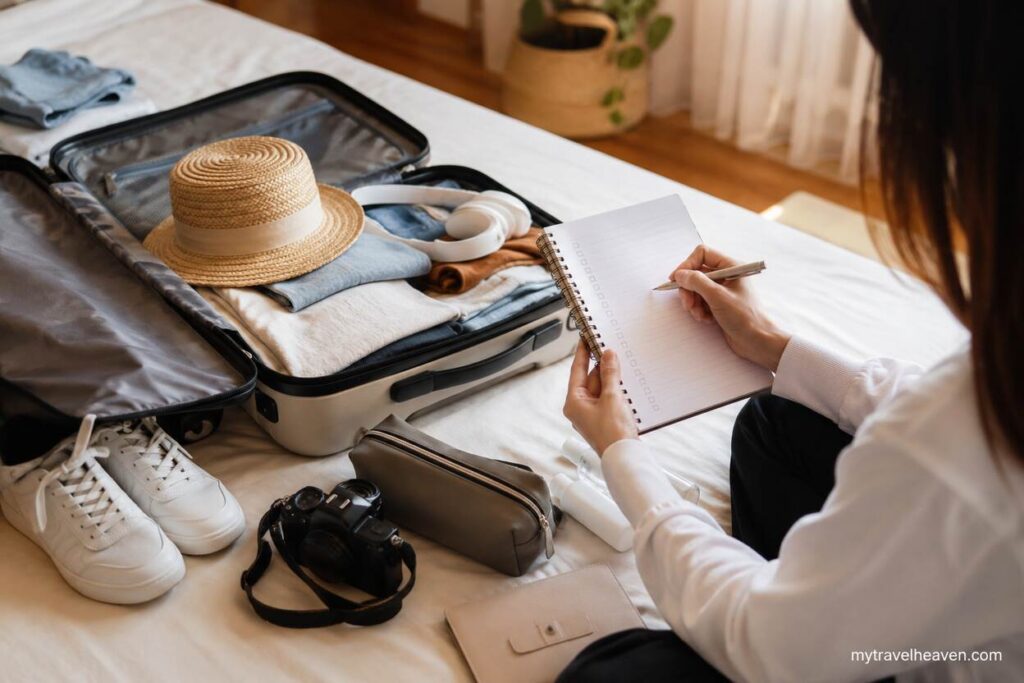
A packing list prevents forgotten items and reduces unnecessary packing. Before placing anything into your suitcase, write down everything you expect to need during the trip. This planning stage helps identify priorities and eliminates duplicate items.
Divide your list into categories such as clothing, toiletries, electronics, travel documents, medications, and accessories. Having clear categories makes it easier to review your needs and ensure nothing important is overlooked.
The length of stay, planned activities, climate, and access to laundry facilities should influence your list. Someone attending business meetings will need different items than someone taking a beach vacation. A packing list creates structure and allows you to pack with purpose instead of guessing.
Check Weather Conditions and Travel Requirements
Weather has a major impact on packing decisions. Before selecting clothing, review the forecast for your destination and consider temperature changes that may occur during your stay.
Packing for cold weather requires layering systems that combine insulation, moisture management, and weather protection. Warm climates generally require lightweight fabrics, sun protection, and breathable footwear. Mixed forecasts call for versatile clothing that can adapt to changing conditions.
Travel requirements also matter. Certain destinations may require specific medications, power adapters, travel documents, or formal attire. Researching these requirements ahead of time prevents last-minute surprises and ensures your suitcase contains everything necessary for a smooth journey.
Select Clothing That Works Together
One of the most effective packing strategies is building a coordinated wardrobe. Instead of packing individual outfits without a plan, choose clothing pieces that can be mixed and matched.
Neutral colors often work best because they pair easily with multiple garments. A few shirts, pants, skirts, or shorts can create numerous outfit combinations when selected thoughtfully. This approach reduces the total number of items needed while maintaining variety.
Focus on versatility. A lightweight jacket may serve as both a casual and dressy layer. Comfortable shoes that work in multiple settings reduce the need for extra footwear. Every item should ideally serve more than one purpose whenever possible.
Example Clothing Planning Table
| Item Type | Quantity for 7-Day Trip |
|---|---|
| Shirts/Tops | 4–6 |
| Pants/Bottoms | 2–3 |
| Underwear | 7–8 |
| Socks | 7–8 Pairs |
| Sleepwear | 1–2 Sets |
| Jacket | 1 |
| Shoes | 2 Pairs |
| Formal Outfit | 1 (If Needed) |
Roll Clothing to Maximize Space
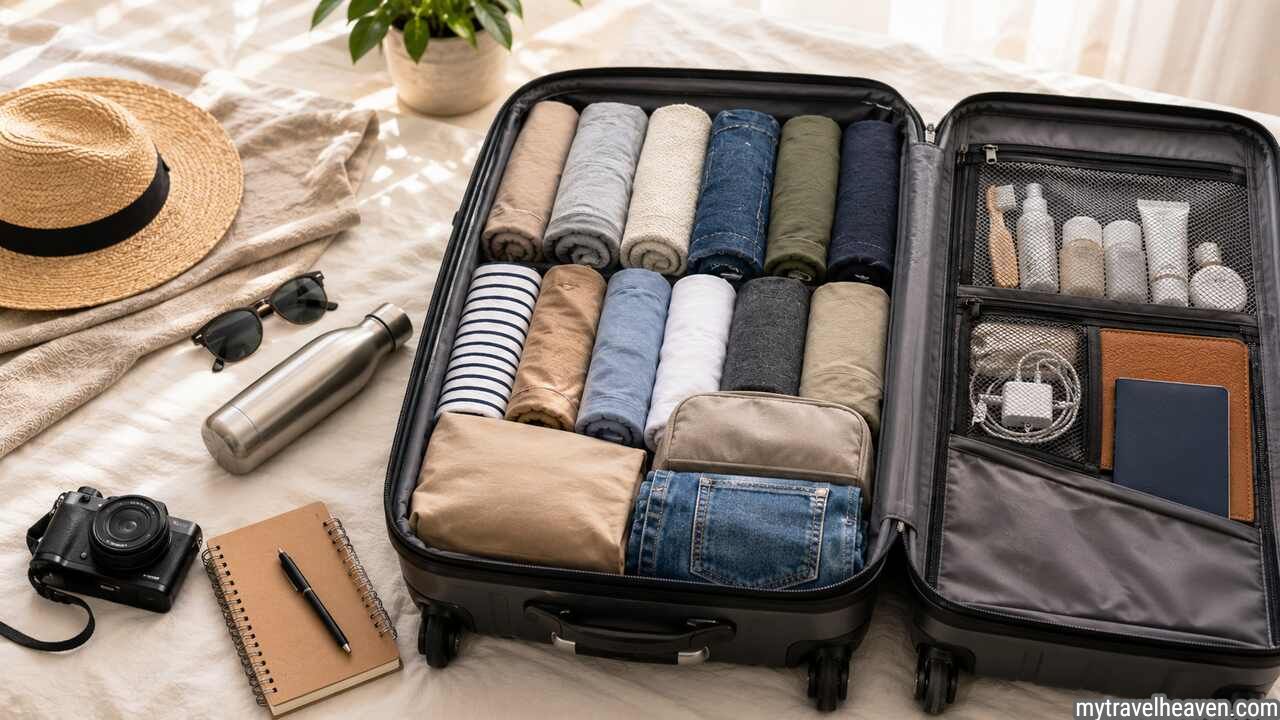
Rolling clothes is one of the most popular suitcase-packing techniques. Instead of folding garments into flat stacks, tightly rolling them often creates more usable space and improves organization.
T-shirts, casual pants, athletic wear, and lightweight fabrics typically roll very well. Rolled clothing can fit neatly into rows, making it easier to locate specific items without disturbing the entire suitcase.
Beyond space efficiency, rolling can reduce wrinkles in many fabrics. The method also allows travelers to see more items at once, improving visibility and accessibility throughout the trip.
Fold Structured Garments Carefully
While rolling works well for many items, certain garments require folding. Dress shirts, blazers, suits, formal dresses, and delicate fabrics benefit from careful folding techniques that preserve their shape.
Place structured clothing near the top of the suitcase to reduce compression. Using dry-cleaning bags or garment sleeves between layers can minimize friction and wrinkle formation during transport.
Combining rolling and folding often produces the best results. Casual clothing can be rolled for efficiency, while formal garments receive the protection needed to maintain a professional appearance.
Use Packing Cubes for Organization
Packing cubes separate belongings into logical categories. Instead of searching through an entire suitcase, travelers can locate specific items quickly within dedicated compartments.
A common system includes separate cubes for shirts, bottoms, underwear, workout clothing, and accessories. Families often use color-coded cubes to distinguish belongings among multiple travelers.
Packing cubes also compress clothing slightly, helping maximize available space. They create structure inside the suitcase and prevent items from shifting during transportation.
Place Heavy Items Near the Wheels
Weight distribution affects both suitcase stability and ease of movement. Heavier items should generally be positioned near the wheel base of rolling luggage.
Shoes, toiletry bags, electronics, and dense accessories belong at the bottom section closest to the wheels. This placement creates better balance and reduces strain on the suitcase frame.
Proper weight distribution also minimizes shifting while the suitcase is upright. Balanced luggage rolls more smoothly and is easier to maneuver through airports, train stations, and hotels.
Pack Shoes Without Wasting Space
Shoes occupy significant suitcase space, making efficient placement important. Before packing, clean footwear to avoid transferring dirt to clothing.
Fill shoes with socks, chargers, belts, or small accessories. This approach utilizes otherwise empty space while helping footwear maintain its shape. Shoe bags or plastic covers can protect clothing from contact with soles.
Limit footwear whenever possible. Many travelers pack more shoes than necessary. Selecting versatile pairs that work across multiple situations helps conserve valuable suitcase capacity.
Protect Toiletries Against Leaks
Toiletries can cause significant damage if containers open during transit. Proper preparation reduces this risk and protects clothing from spills.
Use travel-sized containers whenever practical. Secure caps tightly and place liquids in sealed plastic bags. Many travelers add a layer of plastic wrap beneath bottle caps before resealing containers for additional protection.
Store toiletries in a dedicated waterproof pouch. Positioning this pouch near the center of the suitcase provides extra protection from pressure and impact during handling.
Organize Electronics and Accessories
Modern travel often involves multiple electronic devices. Phones, tablets, laptops, chargers, power banks, cameras, and adapters require organized storage.
Use cable organizers or small pouches to prevent tangled cords. Group related accessories together so they remain easy to locate. Fragile electronics should be protected with padded cases whenever possible.
Keep frequently needed devices accessible. Items required during flights, train rides, or security checks should be stored near the top of the suitcase or in a personal carry-on bag.
Secure Travel Documents and Essentials
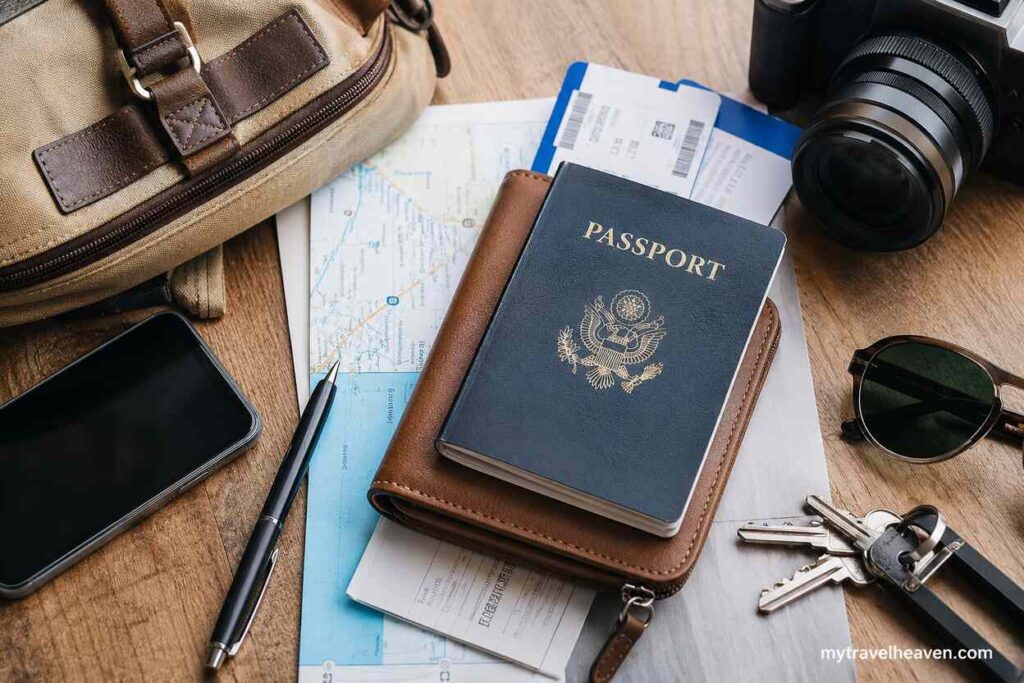
Important travel documents deserve special attention. Passports, identification cards, boarding passes, visas, insurance information, and emergency contacts should never be buried deep inside checked luggage.
Maintain both physical and digital copies of critical documents. Storing backups on a secure device or cloud service provides additional protection if originals are lost.
Medication, wallets, keys, and valuable electronics should remain with you rather than being checked whenever possible. Easy access to essentials improves convenience and reduces travel-related stress.
Layer Items Strategically Inside the Suitcase
A structured packing layout creates better organization and protects belongings. Begin with heavier items at the base and gradually build upward with lighter clothing and delicate items.
Shoes often fit along the edges of the suitcase. Rolled clothing can form compact rows in the center. Folded garments should occupy upper layers where they experience less pressure.
This layered approach creates a stable structure that minimizes movement during transportation. It also simplifies unpacking because items remain in predictable locations.
Leave Room for Souvenirs and Purchases
Many travelers forget to reserve space for items acquired during their trip. Souvenirs, gifts, clothing purchases, and local products can quickly consume remaining suitcase capacity.
Planning ahead prevents the need to purchase additional luggage or pay excess baggage fees. Even a small amount of reserved space can accommodate unexpected purchases.
Expandable luggage can provide additional flexibility. Another strategy involves packing a lightweight foldable bag for return travel if extra storage becomes necessary.
Follow Airline Weight and Size Limits
Airlines enforce baggage restrictions that vary by carrier and ticket type. Exceeding these limits can result in costly fees and inconvenient repacking at the airport.
Weigh your suitcase before departure using a luggage scale. This simple step helps identify potential problems while adjustments remain easy to make at home.
Carry-on dimensions should also be verified in advance. Different airlines apply different requirements, making pre-trip confirmation an important part of travel preparation.
Prepare a Carry-On Backup Strategy
Even when checking luggage, it is wise to prepare for possible delays. Airlines occasionally misplace or delay baggage, making a backup plan valuable.
Pack a change of clothes, medications, toiletries, chargers, and important documents in your carry-on bag. These essentials can support you for at least a day if checked luggage arrives late.
A carry-on backup strategy provides peace of mind and reduces the impact of unexpected travel disruptions.
Compress Bulky Items Efficiently
Bulky clothing such as sweaters, jackets, and winter wear can consume substantial suitcase space. Compression techniques help reduce volume without sacrificing organization.
Compression packing cubes, vacuum bags, and strategic layering methods can create additional room. These tools are particularly useful for cold-weather destinations where heavier garments are unavoidable.
Care should be taken not to over-compress delicate fabrics. Balance space savings with garment protection to avoid unnecessary wrinkles or damage.
Keep Frequently Used Items Accessible
Accessibility matters just as much as space efficiency. Items needed immediately upon arrival should be easy to reach.
Travelers often benefit from placing toiletries, chargers, medications, and one change of clothing near the top of the suitcase. This arrangement minimizes the need to unpack everything when only a few items are required.
Thoughtful accessibility improves convenience throughout the trip and helps maintain organization after arrival.
Perform a Final Suitcase Inspection
Before closing the suitcase, conduct a complete review. Verify that all essential categories are represented and that no important item has been forgotten.
Check travel documents, medications, electronics, chargers, and weather-appropriate clothing. Confirm that liquids are secured and fragile items are protected.
A final inspection provides an opportunity to remove unnecessary items as well. Travelers often discover opportunities to reduce weight and improve organization during this last review.
Close and Secure the Suitcase Properly
Once packing is complete, close the suitcase carefully and verify that zippers move smoothly. Avoid forcing closures because excessive pressure can damage zippers and seams.
Use luggage locks where appropriate and attach identification tags containing contact information. Distinctive luggage tags or straps can also make your suitcase easier to identify on baggage carousels.
A secure suitcase protects belongings throughout transit and reduces the likelihood of accidental opening during handling.
Conclusion
Learning how to pack a suitcase effectively is a valuable travel skill that combines planning, organization, and space management. The process begins with selecting appropriate luggage and creating a packing list, then continues through clothing selection, strategic arrangement, and proper protection of valuables. Techniques such as rolling clothes, using packing cubes, organizing toiletries, and balancing weight distribution help maximize available space while keeping belongings accessible.
A carefully packed suitcase supports a smoother travel experience, reduces stress, and helps ensure that everything you need arrives safely at your destination. By following these step-by-step packing methods, travelers can stay organized, avoid common mistakes, and make the most of every journey.
