



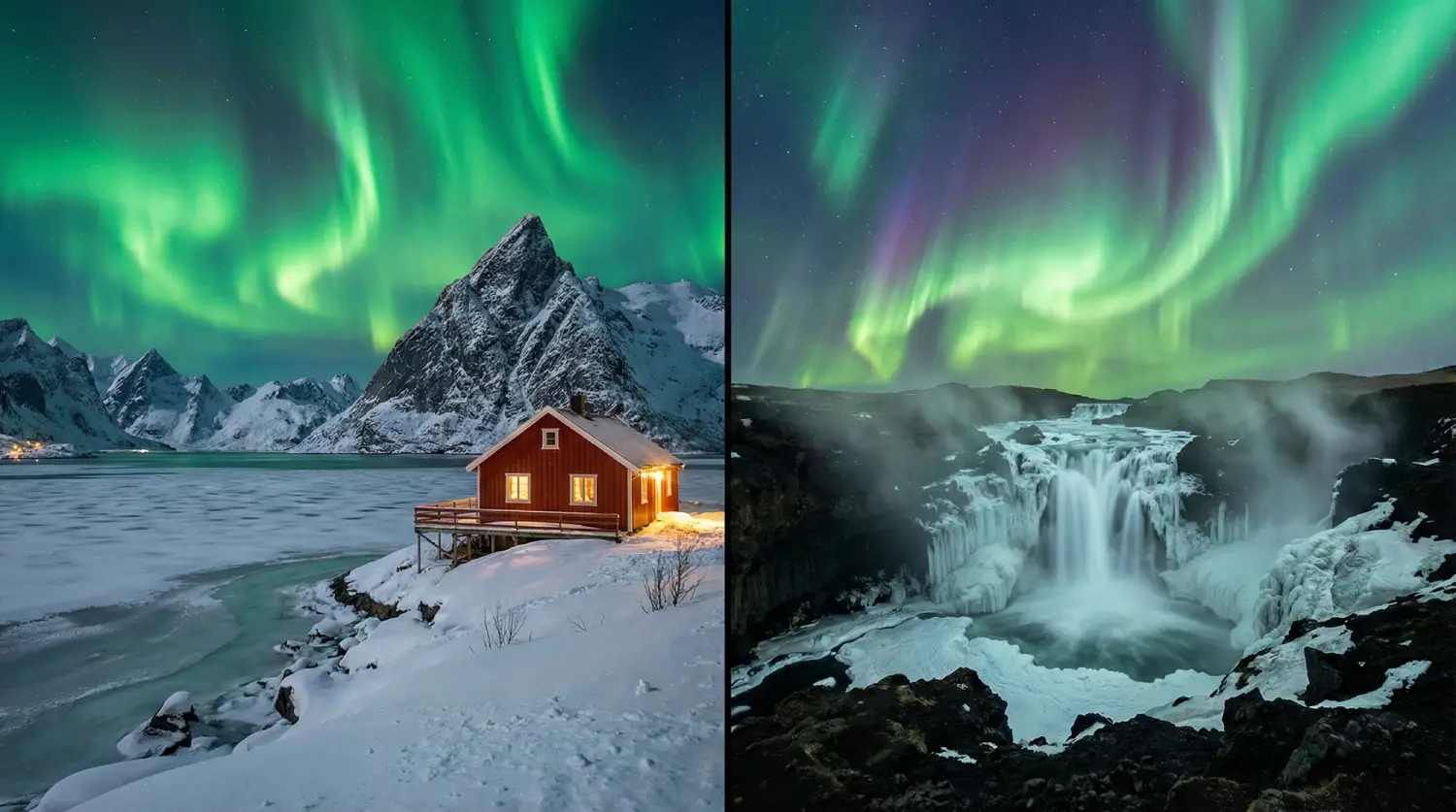
The real northern lights in Norway are among the most breathtaking natural wonders on Earth. Watching ribbons of green, purple, and pink dance across the Arctic sky is an unforgettable experience that draws travelers from every corner of the globe. Norway’s high latitude, dark winter nights, and spectacular landscapes create ideal conditions for witnessing this incredible phenomenon.
Whether you’re planning your first Arctic adventure or returning for another chance to see the aurora, understanding where to go, when to visit, and how to maximize your chances can make all the difference. This guide covers everything you need to know to turn your dream into reality.
Why Norway Is One of the Best Places to See the Aurora
Norway sits directly beneath the Auroral Oval, the region where solar particles most frequently interact with Earth’s atmosphere. This location gives visitors excellent opportunities to witness colorful displays throughout the winter season.
Unlike many destinations, Norway combines reliable aurora viewing with comfortable accommodations, excellent transportation, and dramatic scenery featuring mountains, fjords, snowy forests, and coastal villages.
Another advantage is the country’s range of viewing locations. From lively Arctic cities to peaceful fishing villages, there’s an option for every type of traveler.
What Causes the Northern Lights?
The northern lights, also known as the Aurora Borealis, occur when charged particles from the Sun collide with gases in Earth’s upper atmosphere. These collisions release energy in the form of colorful light.
Different gases create different colors:
- Green is the most common.
- Pink and red appear during stronger solar activity.
- Purple and blue can also be visible under favorable conditions.
Every display is unique, making each viewing experience completely different from the last.
Best Places to Experience the Real Northern Lights in Norway
Norway offers several outstanding destinations for aurora hunting.
Tromsø
Often called the “Gateway to the Arctic,” Tromsø is the country’s most famous northern lights destination. The city offers numerous guided tours, modern hotels, restaurants, and easy access to dark viewing areas.
Alta
Known as the “City of the Northern Lights,” Alta enjoys relatively stable weather and a long history of aurora research. It’s an excellent destination for photography enthusiasts.
Senja
For travelers seeking fewer crowds, Senja delivers dramatic mountains, scenic coastlines, and exceptional night skies.
Lofoten Islands
Although slightly farther south, the Lofoten Islands often experience remarkable aurora displays, especially during periods of strong solar activity. Their iconic fishing villages provide unforgettable foregrounds for photography.
North Cape
Europe’s northernmost accessible point offers expansive Arctic horizons and excellent opportunities during clear winter nights.
Best Time to Visit Norway for Aurora Viewing
The viewing season generally runs from late September through late March.
Each period offers slightly different experiences.
| Time of Year | What to Expect | Ideal For |
|---|---|---|
| September–October | Mild weather and autumn colors | Comfortable travel |
| November–December | Long nights and snowy scenery | Holiday atmosphere |
| January–February | Peak winter with excellent darkness | Highest viewing opportunities |
| March | Longer daylight with stable weather | Photography and outdoor adventures |
While the lights can appear anytime during this season, clear skies remain the most important factor.
Weather Matters More Than Solar Activity
Many travelers focus only on aurora forecasts, but weather conditions often determine whether you’ll actually see the lights.
Cloud cover blocks visibility regardless of solar activity. Experienced guides frequently drive several hours if necessary to find clear skies.
Checking both aurora forecasts and local weather reports significantly improves your chances.
How to Increase Your Chances of Seeing the Aurora
A little planning goes a long way.
Consider these practical tips:
- Stay at least three nights.
- Travel between October and March.
- Leave city lights behind.
- Dress in multiple warm layers.
- Monitor cloud forecasts.
- Join experienced local guides.
- Be patient, as displays can appear suddenly.
Nature never guarantees a performance, but preparation greatly improves the odds.
Guided Tours or Independent Adventure?
Both approaches have advantages depending on your travel style.
Guided Tours
Professional guides monitor forecasts continuously and know where clear skies are most likely. Many tours include warm clothing, transportation, hot drinks, and photography assistance.
Self-Guided Trips
Independent travelers enjoy greater flexibility and lower costs but need to research weather patterns, driving conditions, and safe viewing locations.
First-time visitors often appreciate the convenience and local expertise of organized excursions.
Capturing Amazing Northern Lights Photos
Photographing the aurora requires more than pointing your phone toward the sky.
For the best results:
- Use a tripod.
- Choose a wide-angle lens.
- Set a longer exposure.
- Keep ISO moderately high.
- Use manual focus.
- Carry spare batteries since cold weather drains them quickly.
Even smartphone cameras now include dedicated night modes capable of capturing impressive images under favorable conditions.
A Personal Moment I’ll Never Forget
One of my favorite travel memories was standing quietly beneath an Arctic sky as faint green ribbons slowly transformed into vibrant waves stretching from horizon to horizon. The silence, interrupted only by snow crunching beneath my boots, made the experience feel almost surreal and reminded me why so many people dream of witnessing this natural wonder.
Imagine Your Own Arctic Adventure
Picture arriving in Tromsø after a snowy afternoon. You join a small evening tour, leaving the city lights behind. Hours later, everyone is scanning the sky when a faint green arc appears overhead. Within minutes, it expands into brilliant dancing curtains of light. Cameras click, conversations stop, and complete strangers stand together in amazement, sharing a moment they’ll remember for years.
Experiences like these are exactly why Norway remains one of the world’s top aurora destinations.
More Than Just the Northern Lights
Planning a longer visit allows you to experience much more than nighttime sky watching.
Popular winter activities include:
- Dog sledding
- Snowmobiling
- Sami cultural experiences
- Whale watching
- Reindeer encounters
- Ice fishing
- Fjord cruises
- Arctic hiking
Combining several activities creates a richer and more memorable journey.
Common Mistakes First-Time Visitors Make
Many travelers unintentionally reduce their chances of success.
Avoid these common errors:
- Booking only a one-night stay.
- Ignoring weather forecasts.
- Wearing insufficient winter clothing.
- Expecting bright lights immediately after sunset.
- Staying inside because temperatures feel cold.
Patience and flexibility often reward visitors with unforgettable displays.
Why Norway Continues to Attract Aurora Travelers
Few destinations combine accessibility, dramatic landscapes, comfortable infrastructure, and consistently strong aurora opportunities as successfully as Norway.
Whether you’re watching shimmering lights above frozen fjords or photographing colorful skies over traditional fishing cabins, every location offers its own unique perspective. The journey becomes just as rewarding as the destination itself, creating memories that remain vivid long after the trip ends.
Also Read: Northern Lights Alaska Time of Year | Best Viewing Guide
Conclusion
Seeing the real northern lights in Norway is far more than checking a destination off a travel list—it’s an experience that connects you with one of nature’s most extraordinary spectacles. With careful planning, realistic expectations, and a bit of patience, your chances of witnessing this unforgettable display increase dramatically.
From the vibrant atmosphere of Tromsø to the peaceful beauty of Senja and the Lofoten Islands, Norway offers countless opportunities to experience the magic of the Arctic sky. Bundle up, choose your timing wisely, and prepare for a journey you’ll be talking about for years.
FAQs
Are the northern lights guaranteed in Norway?
No. The aurora is a natural phenomenon influenced by solar activity and weather conditions. Staying several nights provides better chances.
Which city is best for seeing the northern lights?
Tromsø is widely considered the most popular destination due to its accessibility, experienced guides, and excellent tourism infrastructure.
What month offers the best viewing opportunities?
January and February usually provide the longest dark nights, although excellent displays are possible from late September through March.
Can I see the northern lights without joining a tour?
Yes. If skies are clear and you travel away from artificial light, independent viewing is entirely possible.
Do I need expensive camera equipment?
Not necessarily. A DSLR or mirrorless camera produces the best results, but many modern smartphones with night photography modes can capture beautiful aurora images.
Is Norway better than Iceland for aurora viewing?
Both are excellent choices. Norway generally offers a longer viewing season, more accessible Arctic destinations, and a wider range of tour options, while Iceland combines aurora viewing with volcanic landscapes and geothermal attractions.


