



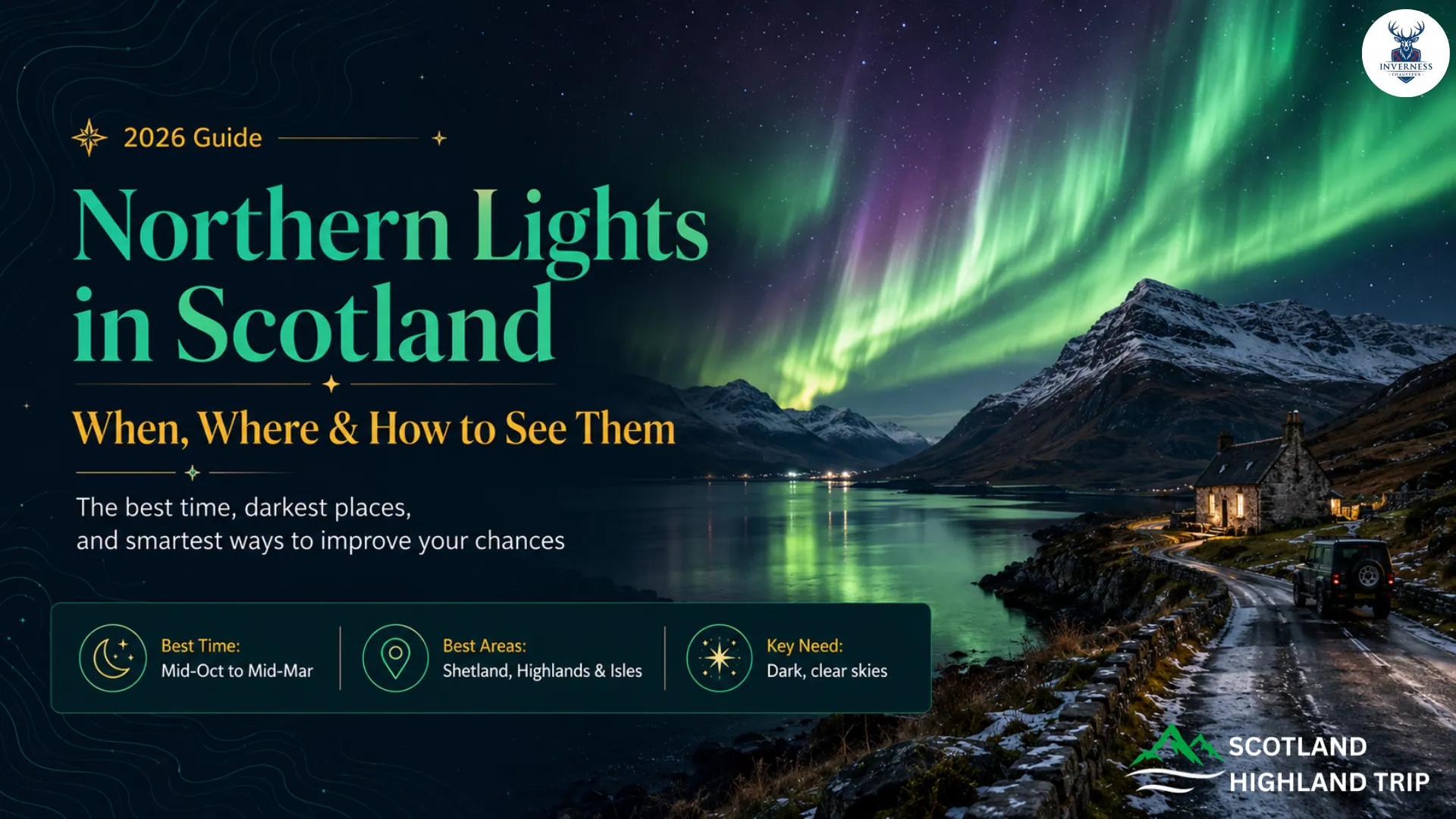
The idea of watching colorful waves of light dance across the night sky feels almost magical. While many travelers immediately think of Norway, Iceland, or Finland when they hear about aurora displays, the northern lights in Scotland offer a surprisingly beautiful experience closer to home. Scotland’s remote landscapes, dark skies, and northern location make it one of the best places in the United Kingdom to witness this natural phenomenon.
Known locally as the “Mirrie Dancers” in Scottish folklore, the aurora appears when charged particles from the sun interact with Earth’s atmosphere. The result is a breathtaking display of green, purple, pink, and sometimes red lights moving across the sky. Although sightings are not guaranteed every night, the right conditions can create unforgettable moments.
What Causes the Northern Lights in Scotland?
The aurora borealis is created by activity on the surface of the sun. During solar storms, the sun releases streams of electrically charged particles that travel through space. When these particles reach Earth, they interact with gases in the atmosphere and produce glowing colors.
The most common shade seen in Scotland is green because of oxygen particles located around 60 to 150 miles above Earth. Higher atmospheric reactions can create red and purple tones, making stronger displays appear even more dramatic.
Scotland is not located as far north as Scandinavia, but its northern regions sit close enough to the auroral zone during periods of strong solar activity. This means residents and visitors occasionally enjoy spectacular views without traveling thousands of miles.
Best Time to See the Aurora Borealis in Scotland
Timing plays a major role when planning an aurora adventure. The best opportunities usually occur between September and March, when longer nights provide more hours of darkness.
Winter often offers the longest viewing window, but autumn and early spring can also be excellent because weather conditions may be clearer. A combination of dark skies, low cloud cover, and increased solar activity creates the perfect opportunity.
The strongest displays typically happen late at night, although the exact timing can change depending on solar conditions.
Best Places to See Northern Lights in Scotland
Location is one of the most important factors when searching for aurora displays. Urban areas with street lighting make it difficult to see faint colors, so travelers should head toward isolated landscapes.
The Isle of Skye is one of Scotland’s most famous destinations for aurora hunters. Its dramatic mountains, coastal views, and limited light pollution create a perfect atmosphere for sky watching.
Popular viewing areas include the northern parts of the island, where open landscapes provide wide views of the horizon.
Shetland Islands
Located far north of mainland Scotland, the Shetland Islands offer some of the strongest chances of seeing the lights. Their northern position places them closer to the auroral activity zone.
The islands also provide a peaceful environment where visitors can enjoy the sky away from crowds.
Cairngorms National Park
The Cairngorms combine mountain scenery with relatively dark skies. On clear winter nights, visitors may see faint aurora displays above the peaks and forests.
Northern Highlands
Remote Highland areas such as Caithness and parts of the Moray coast are excellent options because they have fewer artificial lights and wide-open views.
Comparing Popular Scottish Aurora Viewing Locations
Different locations offer different experiences depending on accessibility, scenery, and darkness.
| Location | Main Advantage | Best For | Accessibility |
|---|---|---|---|
| Isle of Skye | Stunning landscapes and coastal views | Photography and scenic experiences | Moderate |
| Shetland Islands | Northern position and stronger chances | Dedicated aurora trips | Requires planning |
| Cairngorms National Park | Mountains and dark skies | Nature lovers | Easy to moderate |
| Northern Highlands | Low light pollution | Quiet sky watching | Depends on area |
Each destination has its own personality. Some travelers prefer dramatic landscapes, while others simply want the darkest possible sky.
Seeing the aurora requires patienc
How to Increase Your Chances of Seeing the Northern Lights
e because nature does not follow a travel schedule. However, several steps can improve your chances.
First, check aurora forecasts before heading outside. Space weather websites and aurora prediction tools can provide information about solar activity.
Second, move away from cities. Even a small amount of artificial lighting can reduce visibility. A remote beach, countryside road, or mountain viewpoint usually provides a much better experience.
Third, give yourself enough time. Many visitors make the mistake of checking the sky for a few minutes and leaving. Aurora activity can appear suddenly and disappear just as quickly.
A useful approach is combining your aurora trip with other Scottish experiences. Exploring castles, hiking trails, or coastal villages during the day makes the journey worthwhile even if the lights do not appear.
A Real-World Aurora Viewing Scenario
Imagine arriving on the Isle of Skye during a cold February evening. The forecast shows increased solar activity, so you drive away from village lights toward an open coastal viewpoint. The sky looks completely dark at first, but after waiting patiently, a faint green glow begins forming above the horizon. Within minutes, the colors become stronger, creating a memorable moment surrounded by mountains and ocean.
This type of experience highlights why aurora chasing is not just about seeing lights—it is about connecting with Scotland’s wild landscapes.
Photography Tips for Capturing Scotland’s Northern Lights
Capturing the aurora requires preparation because ordinary phone settings may not always produce the best results.
Use a tripod if possible because longer exposure times require a stable camera. A wide-angle lens helps capture more of the sky, while manual settings allow better control over brightness and focus.
Modern smartphones can also capture impressive images when using night modes, especially during stronger displays.
Remember that the best photograph is not always the most important part. Sometimes simply standing beneath the moving sky creates a memory that no camera can fully capture.
My Personal Experience With Aurora Watching
I once spent a cold evening searching the sky during a winter trip, and the most surprising part was not just the lights themselves but the silence around me—the combination of darkness, fresh air, and a changing sky made the moment feel completely different from ordinary sightseeing.
Why Scotland Is a Unique Aurora Destination
What makes Scotland special is the combination of accessibility and untouched scenery. Visitors do not need an expensive international journey to experience something extraordinary. A short trip into the Highlands can transform an ordinary night into a rare natural adventure.
The contrast between ancient landscapes and modern technology is also fascinating. You can use satellite forecasts and smartphone apps to predict the aurora, then stand in a landscape that has remained almost unchanged for centuries.
Also Read: Real Northern Lights Norway | Best Viewing Guide 2026
Conclusion
The northern lights in Scotland provide an unforgettable opportunity to experience one of nature’s greatest displays. Although sightings depend on weather and solar activity, choosing the right season, location, and preparation methods can greatly improve your chances.
From the remote beauty of Shetland to the dramatic scenery of the Isle of Skye, Scotland offers remarkable places to watch the aurora dance above the landscape. Whether you are a photographer, traveler, or simply someone looking for a rare experience, witnessing these lights can become one of the most memorable adventures you ever take.
FAQs
1. Can you really see the northern lights in Scotland?
Yes, the aurora borealis can be seen in Scotland, especially during periods of strong solar activity and in areas with dark skies.
2. What month is best for seeing the northern lights in Scotland?
The best months are generally from September to March because nights are longer and darker.
3. Where is the best place in Scotland to see the aurora?
The Shetland Islands, Isle of Skye, northern Highlands, and Cairngorms are among the top viewing locations.
4. Are northern lights visible every night in Scotland?
No. Aurora sightings depend on solar activity, weather conditions, and darkness levels.
5. Do I need special equipment to watch the northern lights?
No equipment is required. Warm clothing, a dark location, and patience are the most important things to bring.


