


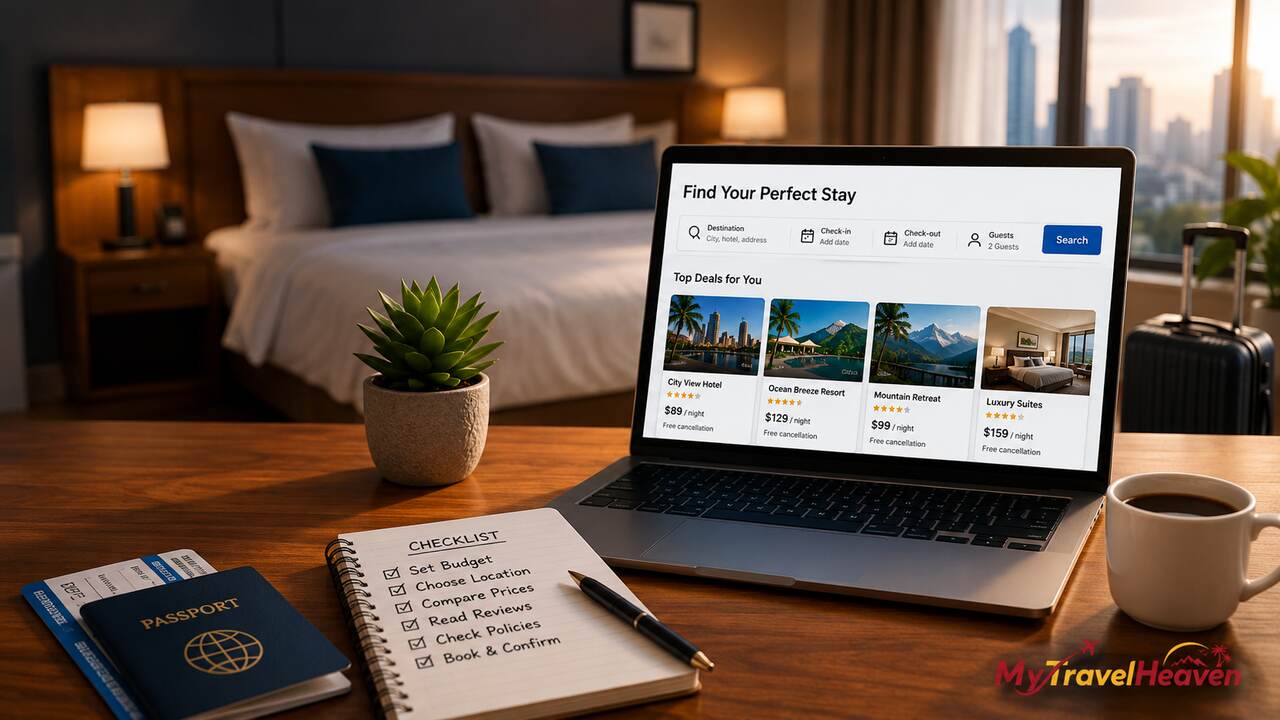
Booking a hotel is one of the most important parts of planning any trip. Whether you are traveling for business, a family vacation, a romantic getaway, or a solo adventure, choosing the right hotel can significantly improve your overall experience. A well-planned booking helps you stay within budget, enjoy better amenities, avoid unexpected fees, and stay close to the attractions or business locations that matter most.
The hotel booking process has become easier thanks to online travel agencies, hotel websites, mobile apps, and review platforms. However, the large number of choices can also make the decision more complicated. Comparing prices, understanding cancellation policies, evaluating guest reviews, and selecting the right room type all require careful attention.
This comprehensive guide explains exactly how to book a hotel from start to finish. You’ll learn how to compare hotels, choose the right location, understand pricing, avoid common mistakes, and secure the best possible value for your money.
Plan Your Travel Requirements
The first step is defining exactly what you need before you begin searching. Your destination, travel dates, budget, number of guests, and purpose of travel all influence which hotel is the best choice.
Business travelers may prioritize Wi-Fi, workspaces, and proximity to conference centers. Families often need larger rooms, breakfast, parking, and kid-friendly facilities. Couples may prefer luxury accommodations with spas or scenic views, while solo travelers often focus on safety and affordability.
Having clear requirements before searching makes it much easier to filter hotels and avoid spending time on options that don’t fit your needs.
Checklist Before Booking
| Requirement | Example |
|---|---|
| Destination | New York City |
| Travel Dates | July 10 to July 15 |
| Number of Guests | 2 Adults |
| Budget | $180 per night |
| Preferred Area | Downtown |
| Must-Have Amenities | Wi-Fi, Breakfast, Parking |
Choose the Right Booking Platform


You have several options when booking a hotel, and each offers different advantages.
The hotel’s official website often provides exclusive discounts, complimentary upgrades, flexible cancellation policies, or loyalty rewards. Booking directly can also simplify customer service if changes become necessary.
Online travel agencies compare hundreds of hotels simultaneously. These platforms allow you to filter by price, location, star rating, guest score, amenities, and more. Many also bundle hotels with flights or rental cars for additional savings.
Mobile booking apps frequently provide app-exclusive discounts and last-minute deals. Frequent travelers may also benefit from collecting reward points through these services.
Regardless of where you book, compare prices across multiple sources before making a final decision.
Select the Best Hotel Location
Location often matters more than luxury. A less expensive hotel far from major attractions may ultimately cost more after transportation expenses.
Consider how close the hotel is to airports, train stations, tourist attractions, restaurants, shopping districts, or your business meetings.
Review neighborhood safety, accessibility, and available public transportation. A hotel near subway stations or bus routes can save considerable time during your trip.
Also consider noise levels. Hotels located in entertainment districts may be lively at night, while residential neighborhoods often provide quieter accommodations.
Compare Hotel Prices Carefully
Hotel prices vary significantly depending on demand, season, booking date, and room availability.
Don’t focus solely on the nightly rate. Compare the total cost including:
- Taxes
- Resort fees
- Parking charges
- Breakfast costs
- Wi-Fi fees
- Service charges
Many travelers discover hidden fees only during checkout. Always review the complete pricing breakdown before confirming your reservation.
Hotel Cost Comparison
| Expense | Hotel A | Hotel B |
|---|---|---|
| Nightly Rate | $140 | $160 |
| Taxes | $18 | Included |
| Parking | $25 | Free |
| Breakfast | $20 | Included |
| Wi-Fi | Free | Free |
| Total Daily Cost | $203 | $160 |
Although Hotel A initially appears cheaper, Hotel B provides better overall value.
Read Guest Reviews Thoroughly
Guest reviews reveal information that promotional photos cannot.
Pay close attention to recurring comments regarding:
- Cleanliness
- Staff professionalism
- Bed comfort
- Bathroom condition
- Internet speed
- Noise levels
- Air conditioning
- Food quality
- Safety
- Maintenance
Recent reviews generally provide a better representation of current hotel conditions than reviews written several years ago.
Instead of focusing on one extremely positive or negative review, identify consistent patterns across hundreds of guest experiences.
Examine Hotel Amenities
Amenities can significantly affect both comfort and total travel costs.
Common hotel amenities include:
- Free Wi-Fi
- Complimentary breakfast
- Swimming pool
- Fitness center
- Airport shuttle
- Restaurant
- Room service
- Business center
- Laundry facilities
- Pet-friendly accommodations
- Spa services
- Parking
Determine which amenities you genuinely need rather than paying extra for features you won’t use.
Business travelers may prioritize reliable internet and meeting rooms, while families often appreciate pools and complimentary breakfast.
Understand Room Types Before Booking

Hotels usually offer several room categories with different sizes and features.
Common room options include:
- Standard Room
- Deluxe Room
- Superior Room
- Executive Room
- Family Room
- Junior Suite
- Full Suite
- Accessible Room
Compare room size, bed configuration, bathroom layout, included amenities, and view before making your selection.
Also verify whether breakfast, parking, lounge access, or other benefits are included with specific room categories.
Review the Cancellation Policy
Cancellation policies differ significantly between hotels.
Some reservations allow free cancellation up to 24 or 48 hours before arrival, while discounted rates may be completely non-refundable.
Flexible bookings often cost slightly more but provide valuable protection if travel plans change.
Before booking, verify:
- Cancellation deadline
- Refund eligibility
- Modification fees
- No-show charges
- Early departure policy
Understanding these policies can prevent unexpected financial losses.
Watch for Special Discounts
Hotels frequently offer promotions that reduce your overall cost.
Potential savings include:
- Early booking discounts
- Last-minute deals
- Member pricing
- Loyalty rewards
- Student discounts
- Senior discounts
- Government employee rates
- Military discounts
- AAA discounts
- Corporate rates
Always compare available offers before completing your reservation.
Some hotel chains also provide price-match guarantees if you find a lower publicly available rate elsewhere.
Complete Your Reservation Carefully
Once you’ve selected your hotel, carefully review every booking detail before payment.
Confirm:
- Guest names
- Travel dates
- Check-in time
- Check-out time
- Room type
- Total price
- Taxes
- Additional fees
- Cancellation policy
- Payment method
After booking, save both your confirmation email and reservation number. Taking screenshots can also provide quick access if internet service is unavailable during travel.
Contact the Hotel Before Arrival
Calling or emailing the hotel a few days before arrival helps confirm your reservation and communicate any special requests.
You may request:
- Early check-in
- Late check-out
- High-floor room
- Quiet room
- Extra pillows
- Connecting rooms
- Airport transportation
- Accessibility accommodations
While these requests are not always guaranteed, hotels often try to accommodate guests whenever possible.
Prepare for Check-In
Before arriving at the hotel, ensure you have everything needed for a smooth check-in.
Typical requirements include:
- Government-issued identification
- Passport for international travel
- Credit card
- Booking confirmation
- Payment receipt if prepaid
Some hotels also require a security deposit that is temporarily authorized on your credit card for incidental expenses.
Knowing these requirements in advance helps avoid delays at the front desk.
Join Hotel Loyalty Programs
Frequent travelers can save money by enrolling in hotel loyalty programs.
Benefits often include:
- Free nights
- Room upgrades
- Late checkout
- Early check-in
- Complimentary breakfast
- Bonus points
- Exclusive discounts
- Priority customer service
Membership is typically free and can provide substantial long-term value for travelers who regularly stay with the same hotel brand.
Avoid Common Hotel Booking Mistakes
Many travelers make simple mistakes that lead to unnecessary expenses or disappointment.
Common mistakes include:
- Booking without comparing prices
- Ignoring cancellation policies
- Choosing based only on photos
- Overlooking additional fees
- Not reading guest reviews
- Selecting inconvenient locations
- Waiting too long during peak travel seasons
- Forgetting to verify room occupancy limits
Taking a few extra minutes during the booking process can prevent many of these problems.
Conclusion
Booking a hotel involves much more than selecting the lowest nightly rate. The best reservation balances location, price, amenities, guest reviews, room quality, and booking flexibility. By planning your travel requirements, comparing multiple booking platforms, reading verified guest feedback, reviewing policies carefully, and confirming every reservation detail, you can avoid costly mistakes and enjoy a comfortable stay.
Whether you’re planning a weekend getaway, an international vacation, or a business trip, following these steps will help you book a hotel confidently and secure the best value for your travel budget.