



Introduction
The question “how many blimps are there” sounds simple, but the answer depends on how blimps are defined and counted. Modern blimps are a specialized type of airship that uses lighter-than-air gas, usually helium, to remain airborne. While these aircraft were once common for transportation, military surveillance, and advertising, they have become relatively rare in the modern aviation industry.
Today, blimps serve niche roles in aerial advertising, tourism, surveillance, scientific research, and special events. Understanding how many blimps exist requires examining active commercial fleets, privately owned airships, military applications, and the broader category of airships. This article explores the current global blimp population, the organizations operating them, and the factors that influence their numbers.
Distinguish Blimps from Other Airships
Before counting blimps, it is important to separate them from other types of airships.
A blimp is a non-rigid airship. Unlike rigid airships such as the famous Hindenburg, a blimp has no internal framework. Its shape is maintained by the pressure of the lifting gas inside the envelope.
Other airships include semi-rigid designs that use a supporting keel and rigid airships that rely on metal frameworks. Many modern airships marketed today are technically not blimps even though the public often uses the term interchangeably.
This distinction matters because the total number of airships worldwide is larger than the number of true blimps. Most estimates focus specifically on non-rigid airships when discussing blimp populations.
Count Active Blimps Operating Worldwide
Most aviation analysts estimate that there are approximately 20 to 30 operational blimps worldwide at any given time.
The exact number fluctuates because airships undergo maintenance, certification changes, retirement, and replacement. Some airships may be airworthy but not actively flying, while others are being refurbished or constructed.
Compared with the tens of thousands of airplanes and helicopters in operation globally, blimps represent an extremely small segment of the aviation industry. Their limited numbers result from high operating costs, weather sensitivity, and specialized use cases.
Estimated Global Blimp Population
| Category | Approximate Number |
|---|---|
| Commercial advertising blimps | 8–15 |
| Tourism and sightseeing blimps | 5–10 |
| Research and experimental blimps | 2–5 |
| Military and surveillance blimps | 5–10 |
| Total active blimps | 20–30 |
These figures vary by year and operator activity.
Examine Major Commercial Blimp Fleets
Commercial operators account for a significant portion of the world’s active blimps.
The most recognizable operator is Goodyear Tire & Rubber Company. Its fleet is among the most visible in the world, frequently appearing at sporting events and major public gatherings.
Advertising remains one of the strongest economic uses for blimps. Their ability to remain visible for extended periods makes them attractive for brand promotion and aerial broadcasting.
Several companies around the world maintain small fleets or individual airships for marketing campaigns, tourism activities, and event coverage.
Notable Operators
| Operator | Primary Purpose |
|---|---|
| Goodyear Tire & Rubber Company | Advertising and event coverage |
| AirSign Airship Group | Aerial advertising |
| Van Wagner Airship Group | Promotional flights |
| Various tourism operators | Sightseeing flights |
These organizations collectively operate a large percentage of the world’s active blimps.
Track the Goodyear Blimp Fleet
Many people assume there are numerous Goodyear blimps flying around the world. In reality, the fleet is relatively small.
The modern Goodyear fleet consists of several advanced airships stationed in different regions. These aircraft cover major sporting events, motorsports races, and promotional activities.
Although the public often refers to every branded airship as “the Goodyear Blimp,” each aircraft has its own identity and operating base.
The visibility of these aircraft creates the impression that blimps are more common than they actually are. A handful of highly active airships generate much of the public’s exposure to blimp operations.
Analyze Military and Surveillance Airships
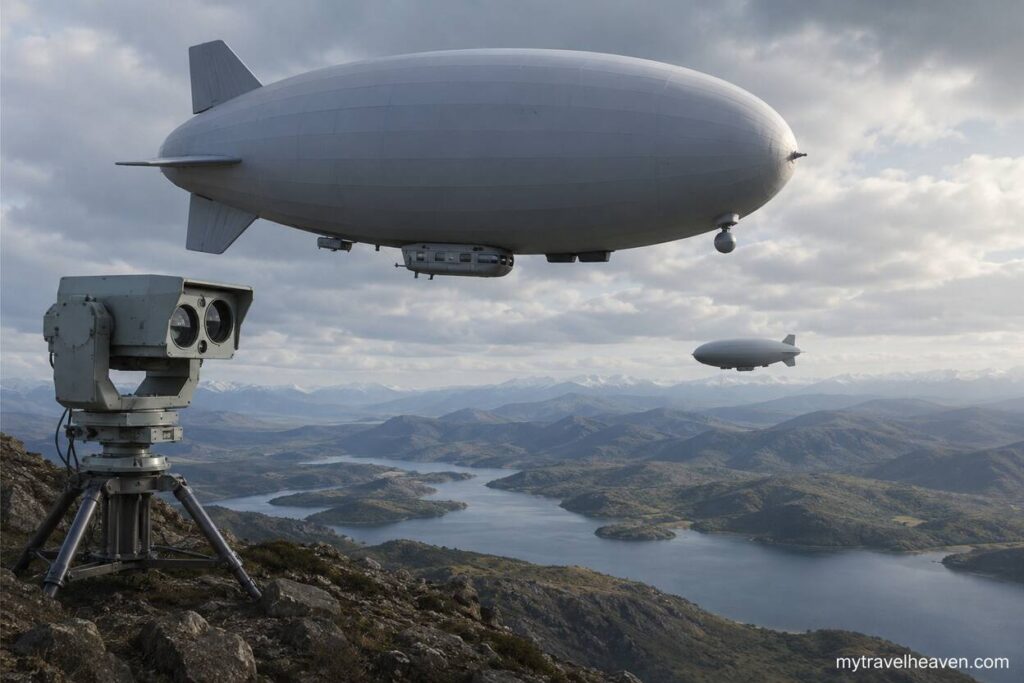

Military organizations have periodically used blimps and related airships for surveillance missions.
These aircraft can remain airborne for long durations while carrying radar, communication equipment, and observation systems. Their endurance provides advantages over conventional aircraft in certain situations.
Several countries have experimented with tethered aerostats and surveillance airships. However, many of these platforms are not technically classified as blimps because they may be tethered rather than free-flying.
Military demand has fluctuated significantly over time. As drone technology has improved, some surveillance roles once considered for blimps have shifted toward unmanned systems.
Review Research and Scientific Applications
Research institutions occasionally employ blimps for atmospheric monitoring, environmental observation, and technology testing.
Their ability to hover and travel slowly allows scientists to collect data that might be difficult to obtain using conventional aircraft. Researchers may use airships to monitor weather conditions, wildlife populations, pollution levels, or agricultural environments.
Scientific blimps generally operate in small numbers. Most projects involve a single aircraft designed for a specific mission rather than large fleets.
Because research funding changes over time, the number of active scientific blimps can vary from year to year.
Understand Factors Limiting Blimp Numbers
Several factors explain why relatively few blimps exist today.
Operating costs can be substantial. Airship maintenance requires specialized facilities, trained personnel, and access to helium. Helium itself is a valuable and finite resource that contributes to operational expenses.
Weather also presents challenges. Strong winds can complicate takeoff, landing, and ground handling procedures. Unlike conventional aircraft, blimps often require larger support crews during operations.
Additionally, airplanes and helicopters can perform many transportation tasks more efficiently. As a result, blimps survive primarily in roles where their unique characteristics provide distinct advantages.
Explore Emerging Airship Developments
Although traditional blimps remain uncommon, interest in modern airship technology has increased.
Several aerospace companies are developing new airships designed for cargo transportation, environmental monitoring, tourism, and remote-area logistics. Many of these vehicles are larger and more technologically advanced than classic advertising blimps.
Examples include projects from Hybrid Air Vehicles and LTA Research. These organizations aim to create more efficient lighter-than-air aircraft capable of carrying substantial payloads.
If these projects achieve widespread commercial success, the global airship population could grow significantly over the coming decades.
Compare Historical and Modern Blimp Numbers


The number of blimps today is much lower than the total number of airships that existed during earlier periods of aviation history.
In the early twentieth century, airships attracted major investment from governments and transportation companies. Large fleets operated for military reconnaissance, passenger service, and strategic observation.
Events such as the Hindenburg disaster reduced public confidence in passenger airships and accelerated the industry’s decline.
Advances in airplane technology further diminished the economic advantages of airships. Faster speeds, greater reliability, and expanding airport infrastructure shifted transportation toward fixed-wing aircraft.
Today, blimps remain valuable but occupy a much smaller niche than they once did.
Estimate Future Blimp Growth
Future blimp numbers will depend on technological innovation and market demand.
Improved materials, autonomous flight systems, and more efficient propulsion technologies could make airships more practical. Environmental concerns may also encourage interest in aircraft that consume less fuel than traditional airplanes.
Remote cargo delivery represents another potential growth area. Airships can transport large loads without requiring extensive runway infrastructure, making them attractive for isolated regions.
While a dramatic return to the golden age of airships is unlikely, moderate growth in specialized applications remains possible.
Conclusion
The best current estimate is that there are roughly 20 to 30 active blimps operating worldwide, with the exact number changing as aircraft enter or leave service. Most are used for advertising, tourism, surveillance, research, and special-event coverage. Although blimps once played a larger role in aviation, modern airplanes and helicopters have largely replaced them for transportation purposes.
Despite their rarity, blimps continue to capture public attention because of their distinctive appearance and unique flight characteristics. Ongoing advances in airship technology may increase their numbers in the future, particularly in cargo transport, environmental monitoring, and sustainable aviation applications.