

Introduction
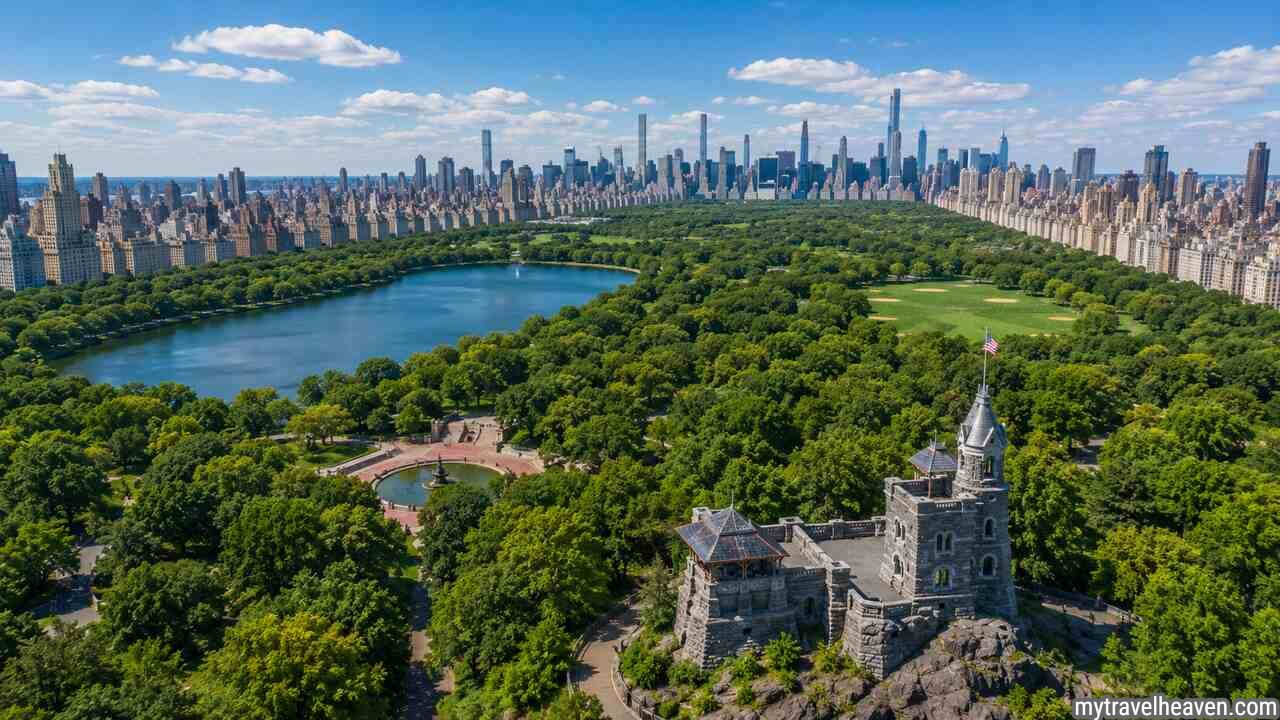
When people ask, “how big is Central Park,” they are often surprised by the scale of this iconic urban landscape. Located in the heart of New York City, Central Park is far more than a neighborhood green space. It is a massive recreational area that serves millions of residents and visitors every year while providing wildlife habitats, cultural attractions, sports facilities, and scenic landscapes. Understanding the park’s size helps visitors plan their trips, appreciate its design, and compare it with other famous parks around the world.
Covering hundreds of acres in one of the world’s most densely populated cities, Central Park remains one of the most recognizable public parks ever created. This guide explores its dimensions, landmarks, walking distances, recreational areas, and the features that make its vast size so remarkable.
Understand the Total Area of Central Park
Central Park covers approximately 843 acres (341 hectares) of land in the borough of Manhattan. This enormous area stretches across a significant portion of the island and provides a green refuge amid skyscrapers and busy city streets.
To put the size into perspective, 843 acres equals roughly 3.41 square kilometers or 1.317 square miles. While these figures may seem abstract, they represent a landscape large enough to accommodate lakes, forests, playgrounds, athletic fields, museums, gardens, and numerous historic structures.
The park was designed during the nineteenth century to give New Yorkers access to nature without leaving the city. The resulting space remains one of the largest and most visited urban parks in the world.
Central Park Size Conversion Table
| Measurement Unit | Size |
|---|---|
| Acres | 843 |
| Hectares | 341 |
| Square Miles | 1.317 |
| Square Kilometers | 3.41 |
| Square Feet | Over 36 million |
| Square Meters | About 3.4 million |
Measure the Length and Width of Central Park
Central Park extends approximately 2.5 miles (4 kilometers) from north to south. It begins near 59th Street at its southern boundary and reaches 110th Street at its northern end.
The park measures about 0.5 miles (0.8 kilometers) from east to west. Although this width varies slightly across different sections, it generally remains around half a mile.
These dimensions create a long rectangular shape that fits neatly within Manhattan’s street grid. The elongated layout allows visitors to experience a variety of environments while traveling from one end to the other.
Walking from the southern entrance to the northern entrance can take over an hour depending on pace, route selection, and stops along the way.
Explore the Major Landscapes Within the Park
The park’s size becomes more impressive when considering the diversity of environments contained within its boundaries. Rather than being a simple open field, it consists of multiple distinct landscapes.
The Great Lawn serves as a large gathering area for sports, concerts, and recreation. The Ramble offers wooded trails and birdwatching opportunities. The North Woods provides a forest-like experience, while several lakes and ponds add aquatic scenery throughout the park.
Visitors can move from open meadows to dense woodland, then to rocky outcroppings and formal gardens, all without leaving the park. This variety demonstrates how effectively the park’s acreage has been utilized.
The combination of naturalistic design and recreational infrastructure allows the space to serve multiple purposes simultaneously, from relaxation and exercise to cultural events and tourism.
Compare Central Park to Other Famous Parks
Comparisons help illustrate just how large Central Park really is. Although it is not the largest urban park globally, it remains one of the most significant due to its location and design.
Park Size Comparison
| Park | Approximate Size |
|---|---|
| Central Park | 843 acres |
| Golden Gate Park | 1,017 acres |
| Hyde Park | 350 acres |
| Luxembourg Gardens | 57 acres |
| Ueno Park | 133 acres |
These comparisons reveal that Central Park is considerably larger than many famous city parks around the world. Its extensive acreage contributes to its reputation as a landmark destination rather than merely a neighborhood recreational space.
The park’s size also enables it to host activities and attractions that would be impossible in smaller urban parks.
Visit the Largest Attractions Across Central Park
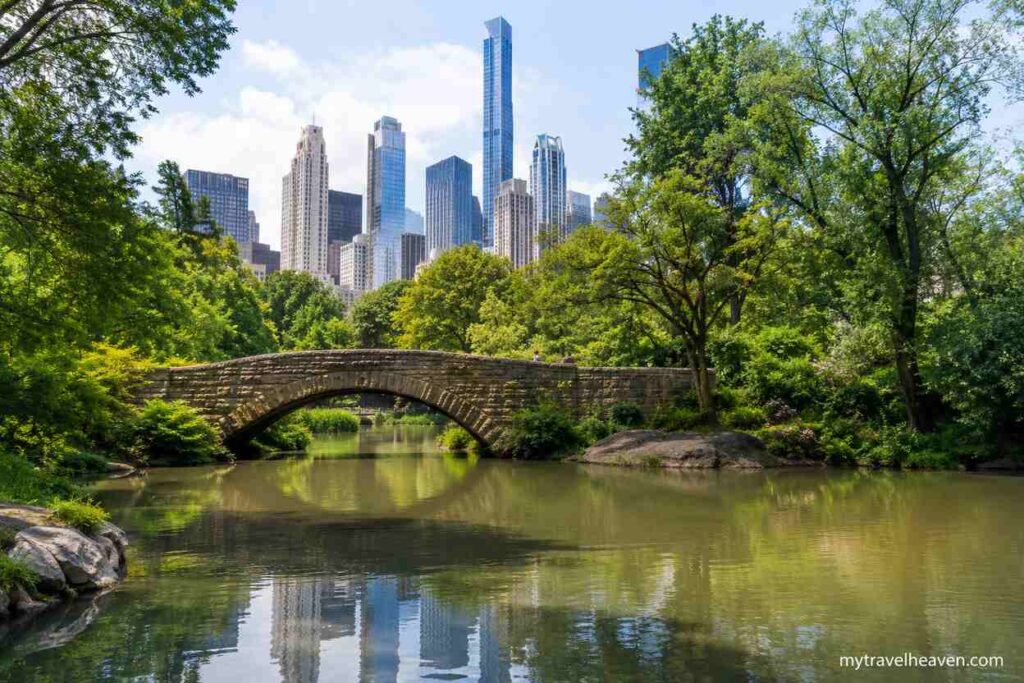

Numerous landmarks occupy portions of the park’s expansive footprint. Some attractions alone cover areas large enough to function as independent destinations.
The Great Lawn spans approximately 55 acres and serves as a venue for recreation and major public events. The Jacqueline Kennedy Onassis Reservoir occupies more than 100 acres and includes a popular running track.
Other notable destinations include:
- Bethesda Terrace
- Bethesda Fountain
- Belvedere Castle
- Strawberry Fields
- The Ramble
- Conservatory Garden
Because these attractions are spread across hundreds of acres, visitors often discover that seeing everything in a single day can be challenging.
The park’s substantial size encourages exploration and repeat visits rather than quick sightseeing.
Walk the Full Distance Across Central Park
Many visitors wonder how long it takes to traverse the park. The answer depends on the chosen route and walking speed.
A direct walk from south to north generally covers about 2.5 miles. At an average walking pace, this journey requires roughly 50 to 70 minutes without extended stops.
Exploring major attractions significantly increases travel distance. Visitors who tour multiple landmarks may easily walk 5 to 8 miles during a full day in the park.
Cyclists, runners, and rollerbladers often take advantage of the park’s extensive pathways and loops. The large size allows different recreational activities to occur simultaneously without overwhelming the space.
For those seeking exercise, Central Park offers one of the most scenic urban fitness environments in the United States.
Discover the Natural Features Occupying the Park
Central Park’s acreage supports a surprising range of natural features. Thousands of trees, shrubs, and flowering plants contribute to the park’s ecological value.
The park contains extensive woodland sections that provide habitats for migratory birds and local wildlife. Birdwatchers regularly visit during migration seasons because of the diversity of species that pass through the area.
Water features include reservoirs, ponds, streams, and lakes. These elements help create varied ecosystems while enhancing the park’s visual appeal.
The park’s size allows nature to thrive despite being surrounded by one of the world’s largest metropolitan environments. This balance between urban development and green space remains one of Central Park’s defining characteristics.
Appreciate the Historical Planning Behind Its Scale
The enormous dimensions of Central Park were not accidental. During the nineteenth century, city planners recognized the need for substantial public green space as New York’s population expanded.
Landscape architects Frederick Law Olmsted and Calvert Vaux developed a plan that combined recreation, transportation, scenery, and ecological preservation.
Their vision required hundreds of acres to accommodate both natural landscapes and public amenities. The resulting design transformed a rugged area of Manhattan into a carefully planned urban oasis.
Today, the park’s size remains a key factor in its success. Smaller parks often struggle to provide the same variety of experiences and environments found within Central Park’s boundaries.
Calculate How Central Park Fits Into Manhattan
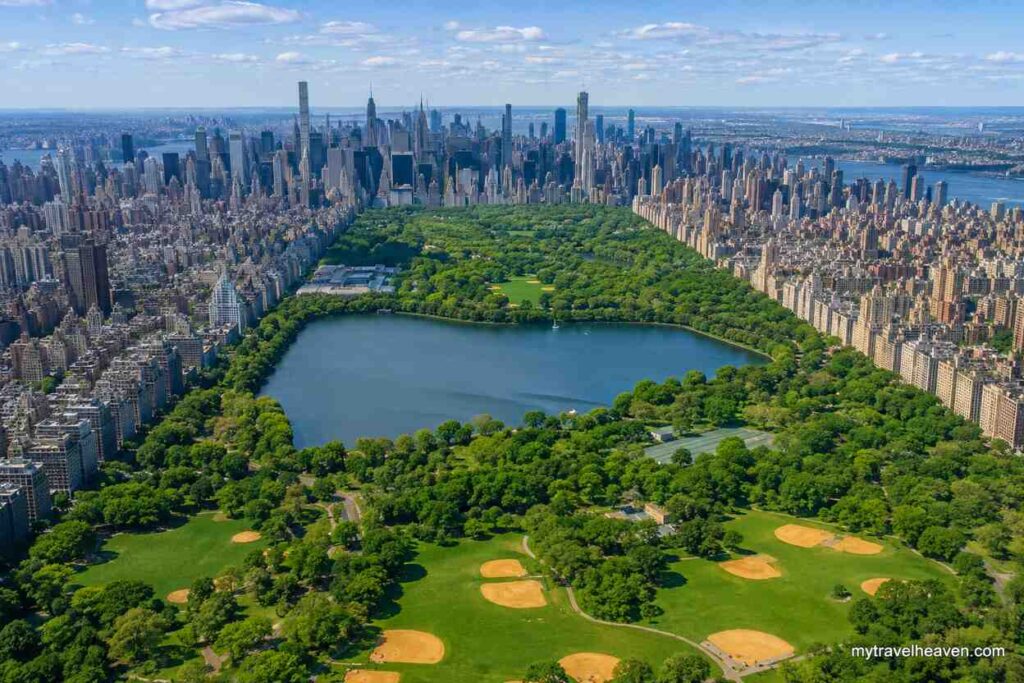
Central Park occupies a significant portion of Manhattan’s total land area. Stretching from 59th Street to 110th Street, it forms a prominent green corridor visible from ground level and aerial views alike.
The park effectively divides portions of Manhattan’s Upper East Side and Upper West Side neighborhoods while serving as a shared recreational resource for both communities.
Its presence influences real estate values, tourism patterns, transportation routes, and neighborhood development throughout the surrounding areas.
Because of its substantial footprint, Central Park functions almost like a city within a city, complete with roads, pathways, landmarks, ecosystems, and gathering spaces.
Experience the Park Efficiently Based on Its Size
Understanding the park’s dimensions helps visitors create realistic itineraries. Many first-time tourists underestimate the distances between attractions and end up missing locations they hoped to see.
Visitors interested in famous landmarks may focus on the southern and central sections. Those seeking quieter environments often prefer the northern woodland areas.
Cycling offers an efficient way to cover large portions of the park. Guided tours can also help visitors navigate major attractions without excessive walking.
Recognizing that Central Park spans 843 acres enables travelers to allocate sufficient time and energy for a more enjoyable experience.
Conclusion
Central Park covers 843 acres, making it one of the largest and most famous urban parks in the world. Stretching approximately 2.5 miles long and 0.5 miles wide, the park contains lakes, forests, gardens, athletic facilities, monuments, and cultural landmarks that collectively create a unique urban environment. Its remarkable size allows millions of visitors to enjoy recreation, nature, sightseeing, and relaxation within the heart of New York City. Whether you plan to walk, cycle, run, or simply explore, understanding the scale of Central Park helps you appreciate why it remains one of the most celebrated public spaces ever created.